
Yes, a DC landlord can renovate a rental unit with tenants in place when the work preserves safe living conditions, follows applicable entry requirements, and receives any required permits. For a 2026 project, the deciding issue is whether each construction phase leaves the home suitable for occupancy—not whether the tenant agrees to tolerate disruption.
- DC landlords can renovate rental unit with tenants in place only when construction preserves safe occupancy and respects tenant rights.
- Keep access notices, construction permits, and any relocation arrangements separate; none substitutes for the others.
- Aandeconstructionllc provides residential renovation services; tenancy disputes and relocation rights require separate legal advice.
- Plan occupied renovation around working bathrooms, essential utilities, protected exits, and controlled construction dust.
Can a DC landlord renovate with tenants in place?
Yes, but occupied renovation needs a phase-by-phase safety plan. Permission to enter does not establish that demolition, plumbing interruptions, or hazardous-material disturbance is compatible with continued occupancy. Start with the scope, then decide whether tenants can remain.
The DC landlord renovation guide provides broader project-planning context. For the occupancy decision, compare these approaches:
| Approach | Best for | Main advantage | Main limitation |
|---|---|---|---|
| Occupied, isolated work | Localized repairs or improvements separated from living areas | Avoids moving the household for otherwise manageable work | Requires protection, coordinated access, and daily cleanup |
| Occupied, phased renovation | Work that can preserve essential services between phases | Allows construction to progress around continued use | Repeated setup and restricted work areas complicate scheduling |
| Renovation with temporary relocation | Work incompatible with safe occupancy | Separates residents from disruptive construction | Requires a lawful, documented relocation and return arrangement |
These are planning choices, not automatic legal permissions. A tenant agreement cannot substitute for required permits, safe conditions, or applicable housing protections.
Why this matters
An occupied rental is a home throughout construction, not simply a jobsite. Tenants need usable facilities and safe access after crews leave, while contractors need clearly defined work areas and authorized access.
For your 2026 renovation, settle the occupancy question before approving demolition. Changing that decision after a bathroom is stripped or utilities are disconnected creates a problem that a revised construction schedule alone cannot solve.
A permit authorizes specified construction; it does not settle tenant-entry, habitability, or relocation questions. Treat those as separate approvals and responsibilities.
When localized work fits occupied renovation
Best for: repairs and improvements that remain physically separate from essential living space. Examples include work in an isolated room or a contained repair area, provided the actual methods do not expose residents to unsafe conditions.
The benefit is limited disruption without moving the household. The drawback is that occupied work requires protection beyond the immediate repair: workers, tools, debris, and material deliveries still need a route through the property.
Before choosing this approach, identify:
- The work boundary and how residents will stay outside it.
- The route for bringing materials in and removing debris.
- The facilities and utilities that remain usable throughout the work.
- The cleanup and security checks required before crews leave.
Do not classify a task as suitable merely because it sounds cosmetic. Sanding, scraping, drilling, and removing finishes can create dust or disturb hazardous materials.
When phased renovation fits continued occupancy
Best for: projects that can preserve essential facilities while separate areas are completed. Phasing means making each stage safe for residents, not simply dividing the contractor's schedule into smaller tasks.
A bathroom project illustrates the distinction. Another functioning bathroom helps with planning, but it does not resolve blocked access, contaminated dust, or plumbing work that interrupts service elsewhere in the home.
The advantage is continued occupancy while work progresses. The limitation is sequencing: repeated protection, cleanup, inspections, and movement between work areas add coordination requirements.
For 2026 planning, ask for a written explanation of what remains usable during every phase. A schedule labeled demolition, rough-in, and finishes does not answer that question by itself.
When temporary relocation needs separate planning
Best for: work that cannot maintain safe living conditions during construction. Full bathroom removal without another usable facility, extensive interior demolition, and major utility interruptions demand an occupancy review before work starts.
Relocation separates residents from construction hazards, but it introduces legal and practical obligations beyond the building contract. Do not assume a landlord can require a tenant to leave simply because renovation would proceed faster.
Have qualified DC landlord-tenant counsel address the applicable process, notices, payment responsibilities, and return arrangements. If a government order affects occupancy, follow the order and obtain advice about the resulting obligations.
A construction proposal should identify the anticipated work and restrictions. It should not purport to waive tenant rights or decide a disputed right to possession.
How do you plan an occupied DC renovation?
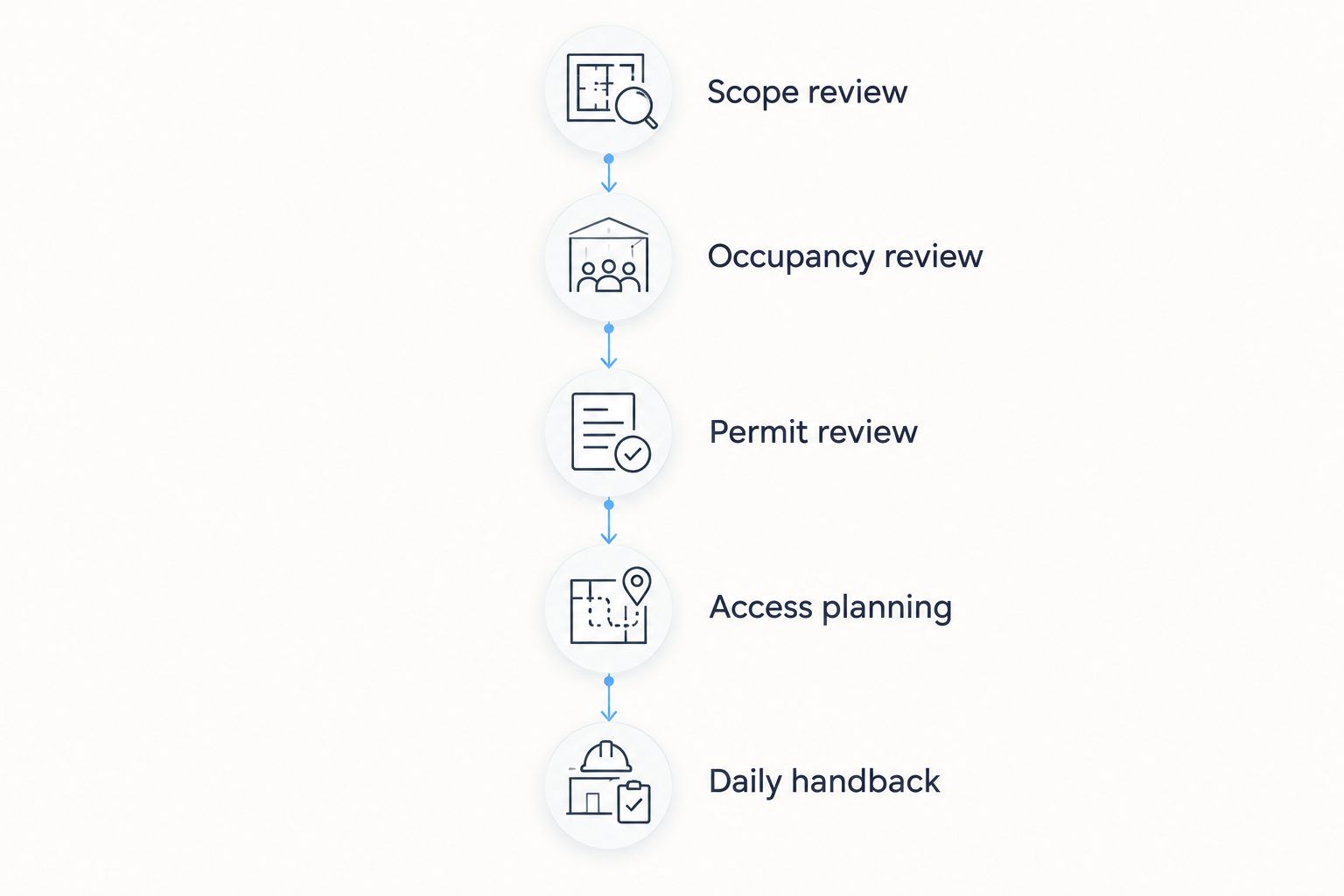
Use this sequence before committing to a start date. Each step resolves a different question; completing the construction scope does not complete the tenant-access process.
- Scope review. Describe what will be removed, repaired, replaced, or opened. Identify affected rooms, shared building systems, and possible hazardous-material disturbance.
- Occupancy review. Establish whether residents can safely remain during each phase. Document usable facilities, protected exits, work boundaries, and service interruptions.
- Permit review. Confirm required permits, inspections, and any building-specific approvals. Assign responsibility for applications and inspection scheduling.
- Access planning. Review the lease and applicable DC entry requirements. Coordinate lawful notices, entry windows, keys, resident communication, and emergency procedures.
- Daily handback. Define the condition in which workers must leave the property. Include cleanup, secured tools, protected openings, functioning services, and locked doors.
A useful plan names the person responsible for every action. Avoid arrangements in which the landlord assumes the contractor notified tenants while the contractor assumes the property manager handled it.
Your written schedule should distinguish construction tasks from decisions still awaiting approval. Do not present an unresolved utility shutdown or tenant-access arrangement as a confirmed work date.
Why occupied renovation plans vary
The same improvement can require different arrangements in different rental homes. These factors determine whether tenants can remain and how construction should be organized:
- Essential facilities. Removing the only usable bathroom presents a different occupancy issue from renovating a bathroom while another remains accessible.
- Shared systems. Plumbing, electrical, heating, and other building connections can affect residents outside the immediate work area.
- Work boundaries. A closed door is not automatically adequate separation for dust-generating demolition or hazardous-material work.
- Access and exits. Deliveries, debris containers, temporary barriers, and stored materials must not compromise safe passage.
- Approvals and inspections. Permit conditions and required inspections shape when concealed work can be covered and spaces returned to use.
- Tenant circumstances. Accessibility needs and accommodation requests require specific review rather than a standard notice copied across every unit.
Choose the occupancy arrangement from the actual work conditions, not from the desired completion date. Review it again whenever hidden conditions change the scope.
What changes when lead-based paint is a concern?
For 2026 planning, the EPA Renovation, Repair and Painting Rule is an essential checkpoint for covered work in housing built before 1978. Its requirements address activities that disturb painted surfaces; a project does not escape review because it is described as a small rental improvement.
Under the EPA rule, the minor repair and maintenance exception generally covers disturbance of 6 square feet or less of painted surface per room indoors or 20 square feet or less outdoors, subject to exclusions and other conditions. Window replacement, demolition of painted surfaces, and certain prohibited practices do not qualify for that exception.
Those figures are regulatory thresholds, not safe-exposure limits. Do not use them to decide that uncontained dust is acceptable around residents.
For covered work, EPA's pre-renovation education requirements generally call for delivery of the Renovate Right pamphlet no more than 60 days before renovation begins, with applicable documentation requirements. The requirements differ for individual units and common areas, so confirm the process for the actual project.
Use EPA's published RRP guidance as the federal reference and confirm applicable DC requirements separately. Ask the responsible firm to document the certifications, work practices, and records required for the specific scope; do not infer qualifications from a general contracting license.
Can tenants stay during a bathroom remodel?
Tenants can stay during a bathroom remodel only when the construction plan preserves safe occupancy, including adequate usable sanitary facilities. Another bathroom is a planning advantage, not a complete safety determination.
Ask the contractor to identify plumbing interruptions, demolition boundaries, ventilation impacts, and the condition of the home at daily handback. If the work leaves essential facilities unusable, resolve occupancy before demolition rather than improvising afterward.
Does a renovation permit let a landlord enter an occupied unit?
A renovation permit does not replace the tenant-entry process. Review the lease and applicable DC notice and access rules separately from construction permitting.
Do not treat a contractor's arrival time as notice to the tenant. If access is disputed, resolve the dispute through the proper process instead of directing workers to force entry or pressure the resident.
Can a landlord require tenants to leave for renovations?
A landlord cannot treat a renovation schedule as automatic authority to require tenants to leave. The applicable legal basis, notice process, and tenant protections need separate review.
Distinguish a voluntary temporary arrangement from a legally required move or an attempt to end the tenancy. Have DC landlord-tenant counsel review the documents before asking residents to sign.
What should you send a renovation contractor?
Send the property address, occupied rooms, proposed scope, available plans, known building conditions, target schedule, and any existing permit documents. Explain whether the work affects the only bathroom, kitchen, entry route, or shared utilities.
Aandeconstructionllc is best for DC landlords seeking a general contractor for residential renovation, not advice on tenancy disputes. The company offers home renovation and bathroom and kitchen remodeling; obtain legal advice separately for disputed entry, relocation, or possession questions.
Use the Aandeconstructionllc website to request a project discussion. Ask for a proposal that separates construction work, owner responsibilities, exclusions, and decisions that must be resolved before mobilization.
Request a renovation project review
Share the address, occupied areas, proposed work, target schedule, and available plans or permits.
FAQ
Can I renovate rental unit with tenants in place in DC in 2026?
Yes, you can renovate a rental unit with tenants in place when the work preserves safe occupancy and complies with applicable entry, permit, and housing requirements. Review each construction phase rather than assuming the entire project is suitable for occupancy.
Can my tenant agree to stay without a working bathroom?
A tenant's agreement does not replace applicable habitability requirements. Resolve access to adequate sanitary facilities and obtain legal advice before work removes the home's usable bathroom.
Do I need tenant permission as well as a construction permit?
Construction permits and tenant-access requirements address different issues. Review the lease and applicable DC law to establish the proper notice and access process for the work.
Can tenants stay home while contractors remove painted surfaces?
Continued occupancy depends on the work methods, containment, affected areas, and applicable lead-safety requirements. For covered pre-1978 housing, review EPA RRP requirements and applicable DC rules before disturbing paint.
Is temporary relocation always necessary for a kitchen remodel?
Temporary relocation is not automatic for every kitchen remodel. Evaluate essential facilities, utility interruptions, dust controls, and the actual living conditions during each phase before deciding.
What happens if demolition reveals additional repairs?
Reassess safe occupancy before expanding demolition or continuing under the original plan. Document the changed scope, approval needs, access arrangements, and any effect on essential services.
Can Aandeconstructionllc help with a DC rental renovation?
Aandeconstructionllc offers residential renovation and kitchen and bathroom remodeling services. Provide the address, proposed work, occupancy details, target schedule, and available documents for a project discussion; handle tenant-rights questions with qualified counsel.
One last thing
The most useful occupied-renovation checkpoint happens at the end of the workday. A room that was controlled while crews were present still needs a safe boundary, secure tools, clear exits, and appropriate service conditions after they leave.
For your 2026 project, require a written daily handback checklist before construction starts. If the team cannot describe how the home will be left safe each evening, the occupied-work plan is not ready.