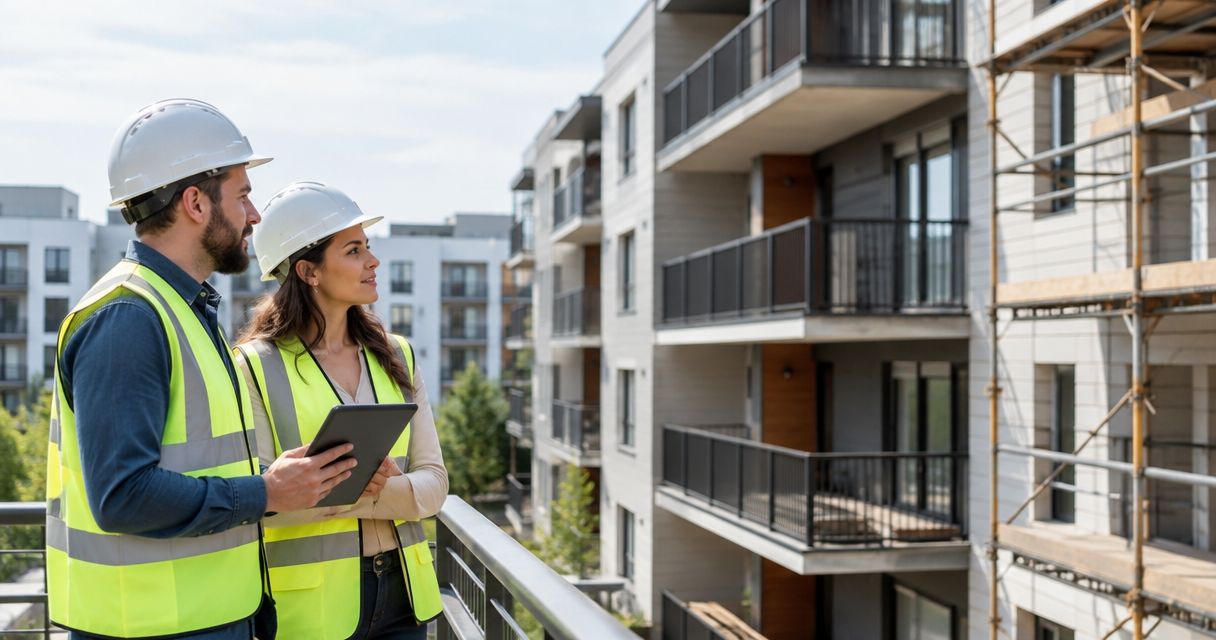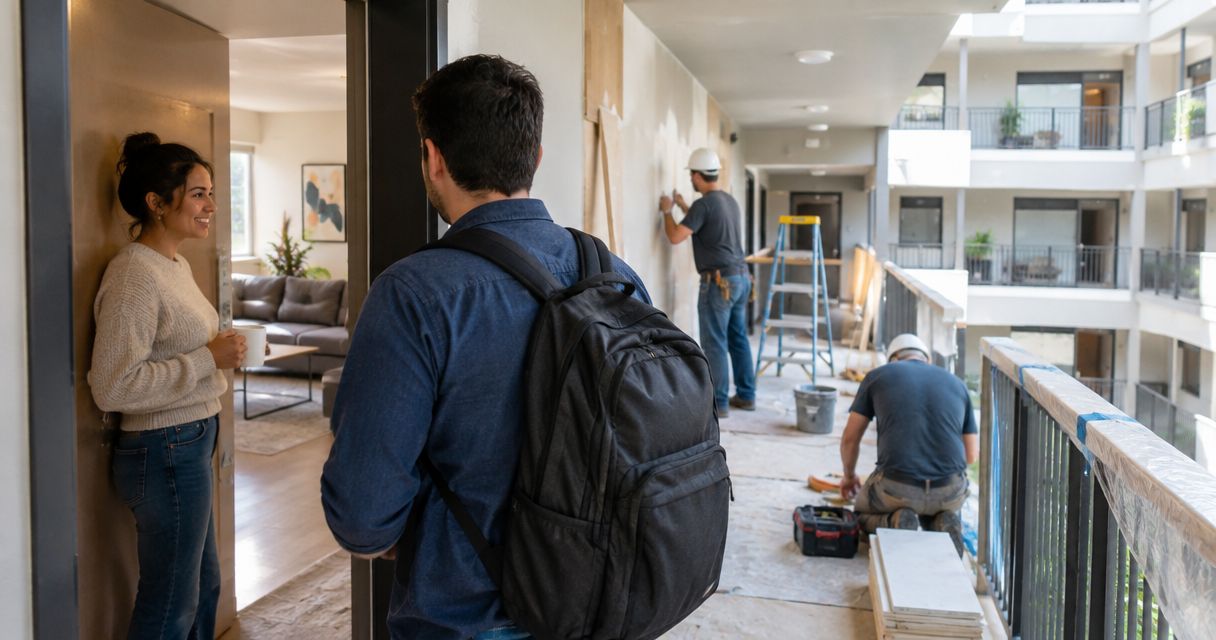
Yes, multi-family buildings can be renovated while occupied when construction preserves safe access, essential services, and separation between residents and work areas. Occupancy must be assessed by unit and construction phase—not assumed for the entire building. Work that makes a home unsafe or uninhabitable requires a different sequence or temporary relocation, subject to applicable requirements.
- Can multi-family renovation happen while occupied? Yes, when safe access, essential services, and protected living areas remain available.
- Washington, DC property owners should assess occupancy by unit, shared system, and construction phase.
- Phased construction preserves some occupancy but adds access, protection, cleanup, and resident-coordination work.
- Temporary relocation is the right choice when construction cannot preserve safe, habitable living conditions.
Why this matters
Keeping a building occupied does not mean keeping every apartment occupied through every task. A hallway repaint, a kitchen demolition, and a shared plumbing replacement create different conditions for residents. Your construction plan must address those differences before work starts.
For a 2026 renovation, make continued occupancy a written planning requirement rather than a verbal promise. The home renovation guide for DC landlords provides related owner-focused planning context. Start with the scope, then decide where residents can safely remain.
The deciding question is not whether residents tolerate disruption; it is whether each occupied home remains safe and usable. Noise complaints need management. Blocked exits, uncontrolled dust, and loss of essential facilities need changes to the construction plan.
Can multi-family renovation happen while occupied?
Yes, but the answer changes with the work area, affected utilities, and condition of each apartment. Use the following comparison to choose an occupancy approach. These are planning options, not automatic approvals to keep residents in place.
| Approach | Best for | Main advantage | Main limitation |
|---|---|---|---|
| Occupied, separated work | Localized work that can stay outside protected living areas | Residents remain at home while defined areas are improved | Requires dependable separation, access control, and daily cleanup |
| Phased unit or area work | Projects that can be divided into independent work zones | Limits the area disrupted at any given stage | Repeated setup and shared-system work complicate sequencing |
| Vacant-unit renovation | Work inside apartments that are already empty | Separates residents from in-unit construction | Adjacent occupied apartments still need protection |
| Temporary relocation | Work that cannot preserve safe, habitable conditions | Removes residents from the affected living space | Requires a relocation plan and review of applicable obligations |
A vacant apartment is not an isolated construction site if its plumbing, ventilation, walls, or access routes connect to occupied homes. Review those connections before approving demolition. An empty unit does not eliminate building-wide responsibilities.
Likewise, a building-wide project does not automatically require every resident to leave. The relevant question is whether the contractor can isolate each phase without compromising the occupied portions of the property.
Occupied work: protect the home before starting demolition
Best for: localized improvements with a clearly separated work area. Occupied work is appropriate only when residents retain the facilities and access they need, and construction hazards stay outside their living space.
Before authorizing a phase, document the work boundary, resident route, material route, and cleanup responsibilities. Identify where workers enter, where debris leaves, and how doors remain secure. Do not rely on residents to avoid hazards that the construction team should control.
The advantage is continuity: residents can stay home while defined work progresses. The limitation is that construction must accommodate daily living. Room access, deliveries, noisy tasks, and utility interruptions need coordination rather than unrestricted scheduling.
End-of-shift conditions matter as much as active work. Require the contractor to leave protected routes clear, secure tools and materials, and confirm the condition of affected services before residents use the area again.
Phased renovation: divide work by systems as well as rooms
Best for: projects with work areas that can function independently. Phasing can separate construction from occupancy, but a floor-by-floor schedule alone does not prove that separation works.
A plumbing riser can serve apartments on different floors. Electrical or ventilation work can also reach beyond the room where workers stand. Map those relationships before deciding which residents remain in place.
For a 2026 scope, identify each phase's starting conditions and completion criteria. A phase should not advance simply because demolition is finished; inspections, service restoration, cleaning, and safe access must also be addressed.
The benefit is a smaller active work zone. The trade-off is repeated mobilization, protection, and communication. Ask bidders to explain those tasks explicitly so that proposals describe the same occupied-building obligations.
Temporary relocation: use it when separation is not enough
Best for: work that cannot maintain safe living conditions in the affected home. Relocation belongs in the initial plan whenever the scope threatens essential facilities, safe exits, or effective separation from hazardous work.
Do not treat relocation as a last-minute response to resident complaints. Establish the decision process before construction: who evaluates the condition, who contacts the resident, and who authorizes the next step.
Relocation removes residents from the affected space, but it does not remove the owner's responsibilities. Review lease provisions, notice requirements, accommodation needs, and local rules with qualified counsel or the appropriate housing authority. Do not assume that the same requirements apply throughout DC, Maryland, and Virginia.
A resident's willingness to stay is not a substitute for a safe construction plan. If the home cannot remain safely usable, change the sequence or arrange an appropriate alternative.
How do you plan an occupied multi-family renovation?
Use this sequence to turn continued occupancy into defined construction requirements. For a 2026 project, complete the occupancy review before fixing a demolition start date.
- Scope review. Identify the work inside apartments, shared spaces, exterior areas, and building systems. Mark occupied units and record known access or accommodation needs without circulating unnecessary personal information.
- Occupancy review. Determine which homes can remain occupied during each task. Identify activities that require a different work sequence or a relocation decision.
- Approval review. Confirm applicable permits, inspections, owner or association approvals, and resident-notice requirements. Assign responsibility for each approval instead of assuming the contractor handles everything.
- Phase planning. Define barriers, resident routes, material handling, shutdown coordination, and protection of adjoining homes. Connect the construction sequence to shared-system dependencies.
- Resident notices. Explain the affected areas, expected activities, access arrangements, and contact process. Update residents when conditions change rather than allowing an outdated notice to remain the only instruction.
- Daily closeout. Check work-zone security, cleanliness, access, and service status. Record unresolved issues and address conditions that affect occupancy before handing the area back.
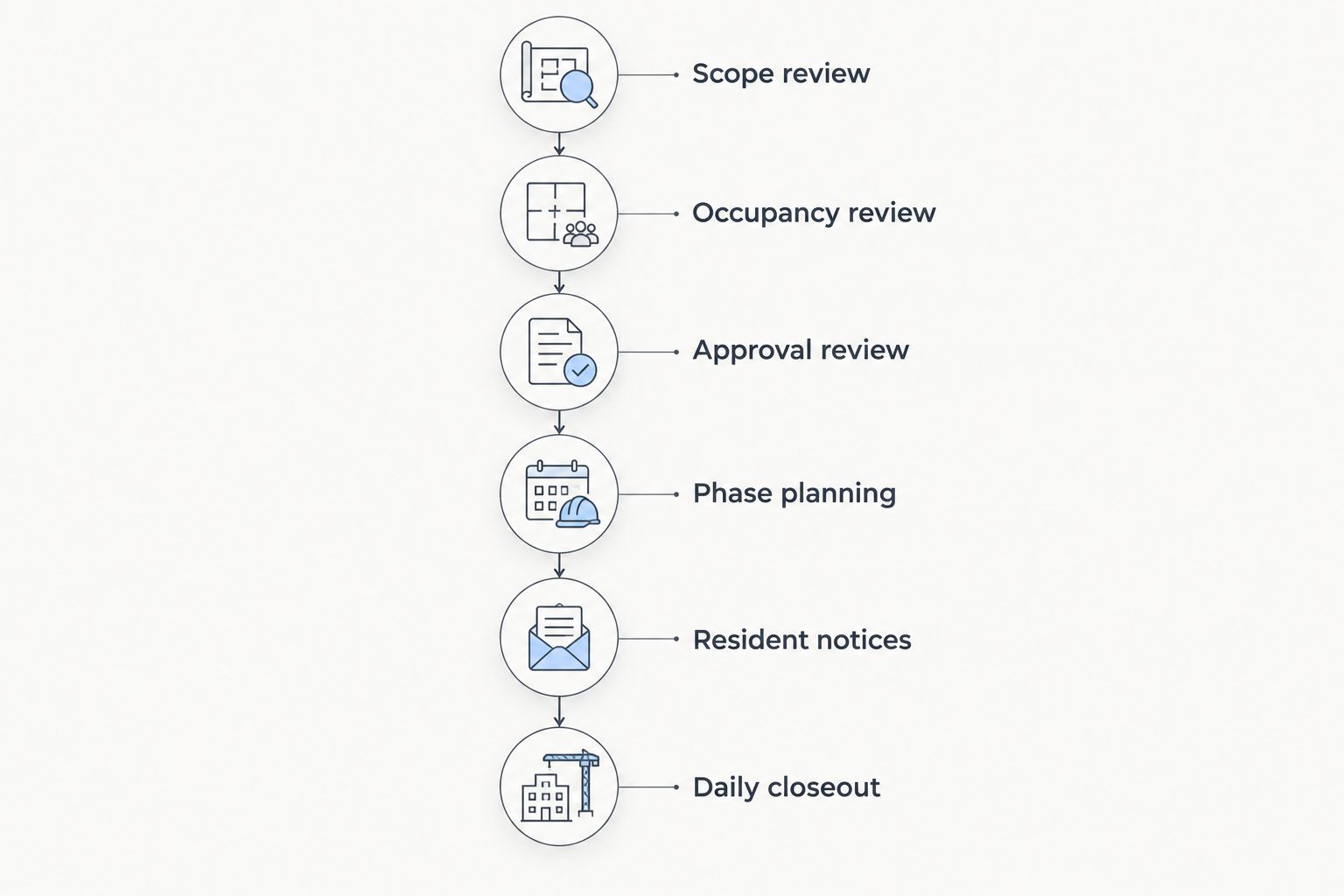
Keep these decisions in the project documents. A schedule alone does not tell workers which homes remain occupied, which route residents use, or what must happen before a utility is interrupted.
Why occupied-renovation plans vary
The same finish selection can require different construction plans in different buildings. These factors determine whether your proposed occupancy arrangement works:
- Work location. Construction inside a resident's kitchen or bathroom affects daily living differently from work in an isolated vacant apartment.
- Shared systems. Plumbing, electrical, ventilation, and life-safety connections can extend the impact beyond the immediate work zone.
- Access and circulation. Resident entrances, stairs, elevators, and accessible routes must be considered alongside worker and material movement.
- Existing materials. Suspected lead paint or asbestos requires appropriate evaluation and controls before disturbance; ordinary cleanup is not a substitute.
- Resident needs. Mobility limitations, medical needs, and access requirements can change the practical occupancy plan.
- Approval requirements. Permits, inspections, association rules, lease provisions, and local housing requirements shape the sequence and notices.
For older properties, assess hazardous-material concerns before demolition rather than after workers uncover a problem. EPA lead-safe renovation requirements apply to covered work in pre-1978 housing; confirm applicability with a qualified professional. That historical cutoff is not a substitute for evaluating the actual building and scope.
Can residents stay during kitchen and bathroom renovations?
Residents can stay only when the renovation preserves safe, usable living conditions. Kitchen or bathroom work needs a specific review of sanitation, water, cooking arrangements, work-zone separation, and access—not a blanket assurance that the apartment remains occupied.
If a bathroom is unavailable, determine whether the remaining facilities and access meet applicable requirements. Do not assume that access to another apartment or a shared facility resolves the issue. Confirm the arrangement before removing fixtures.
Kitchen work also affects more than cabinets. Demolition debris, exposed services, and shutdowns require controls, while residents need clear instructions about which areas and appliances remain usable.
Can residents stay during building-wide utility work?
Residents can stay only if the utility-work plan maintains acceptable conditions for the affected homes. Map each shutdown to the apartments and shared areas it serves, then determine the required notice, restoration process, and occupancy response.
Do not promise a shutdown duration before the responsible trades and relevant utility have confirmed the work sequence. Include a response for service that cannot be restored as planned. Residents need a clear contact and updated instructions, not an expired interruption notice.
What should a property owner ask a contractor before signing?
Ask the contractor to explain how the proposed scope protects occupied homes, not simply whether the company works in apartment buildings. A useful proposal identifies protection work, access rules, shutdown coordination, cleanup, and responsibility for resident communication.
For a 2026 contractor review, request:
- A phase plan showing occupied and construction areas.
- Defined responsibility for resident notices and access scheduling.
- Procedures for dust, debris, material storage, and daily cleanup.
- A process for unforeseen conditions and changes affecting occupancy.
- Clear boundaries between construction, design, inspections, and owner responsibilities.
- Relevant experience and credentials supported by documents rather than unsupported claims.
Aandeconstructionllc is a licensed general contractor offering renovation and construction services in DC, Maryland, and Virginia. Aandeconstructionllc is a fit for owners seeking general contracting for renovation work in the DC region. An occupied multi-family project still needs a project-specific review; a general service description does not establish that every proposed occupancy arrangement is suitable.
When approaching Aandeconstructionllc about multi-family renovation, provide the property address, occupied areas, proposed scope, known utility constraints, available drawings, and target schedule. Ask for a site review that addresses those conditions before requesting a firm construction sequence.
Request an occupied-building site review
Share the address, scope, occupancy details, utility constraints, drawings, and target schedule.
FAQ
Can multi-family renovation happen while occupied?
Yes, multi-family renovation can happen while occupied when safe access, essential services, and separation from construction hazards remain available. Evaluate occupancy by apartment, affected system, and construction phase.
Do all tenants have to move out during an apartment building renovation?
No, an apartment building renovation does not automatically require every tenant to leave. Residents in affected homes need a different arrangement when the work cannot preserve safe, habitable conditions.
Can I renovate an empty apartment while neighboring units stay occupied?
Yes, neighboring units can remain occupied when the construction plan protects them from hazards and service disruptions. Review shared plumbing, ventilation, access routes, and adjoining work areas before demolition.
Is phased renovation better than moving residents out?
Phased renovation is better suited to work that can be separated into safely functioning areas. Relocation is the appropriate approach when phasing cannot preserve safe living conditions in an affected home.
How much notice do residents need before construction starts?
Resident-notice requirements depend on the jurisdiction, lease, access needs, and type of work. Confirm the applicable requirements before issuing notices rather than using a single assumed deadline for every property.
Can tenants stay while the only bathroom is being renovated?
Do not assume tenants can stay while their only bathroom is unavailable. Establish an acceptable sanitation and occupancy arrangement under applicable requirements before removing fixtures.
What should I send a contractor for an occupied-building site review?
Send the property address, proposed scope, occupied areas, known utility constraints, available plans, and target schedule. Identify access restrictions and explain which spaces or services the work will affect.
One last thing
Inspect the building as residents will use it after workers leave. A clear corridor during the morning walkthrough does not help if debris blocks it at the end of the shift. Make daily closeout an occupancy checkpoint, not just a housekeeping task.
Before authorizing your next 2026 renovation phase, ask Aandeconstructionllc or your selected contractor to show where residents will walk, which services remain usable, and how the work area will be secured overnight. Those answers make continued occupancy a construction decision rather than a hopeful assumption.