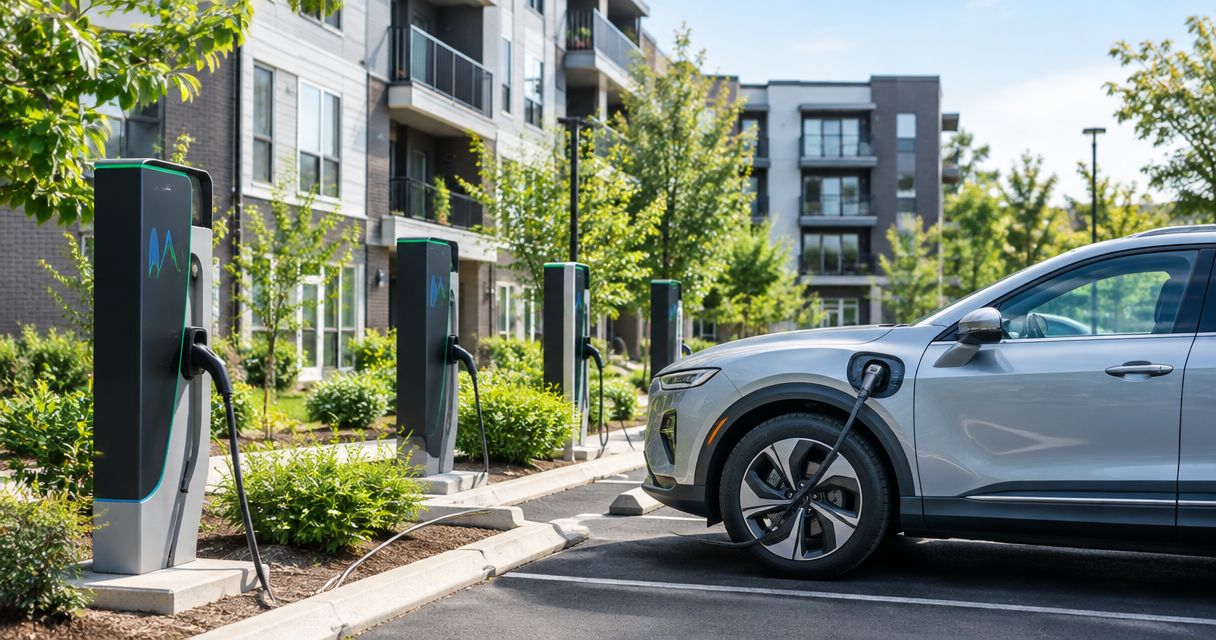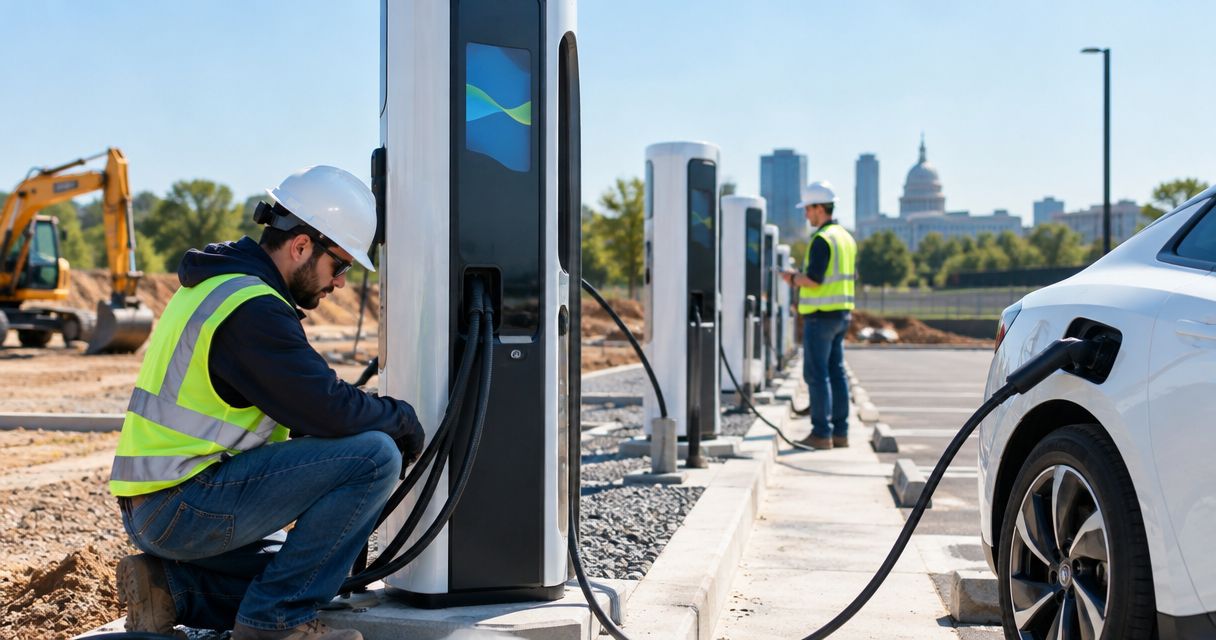
EV network owners’ site construction is the civil, electrical make-ready, and installation coordination work that turns a proposed charging location into a usable site for drivers or fleets. An EV charging site construction contractor should address the whole site—not just charger mounting—including access, power delivery, construction sequencing, and handover responsibilities.
- Choose an EV charging site construction contractor for full-site delivery, not equipment installation alone.
- Aandeconstructionllc suits buyers seeking manufacturer-neutral construction and electrical make-ready coordination rather than charger-only sales.
- Commercial, multifamily, and public-sector fleet sites need different access, scheduling, and acceptance plans.
- Separate construction responsibilities from engineering, utility approvals, networking, and commissioning before comparing proposals.
Why site construction matters for EV network owners
Commercial property owners, multifamily managers, fleet operators, developers, and public agencies share one requirement: charging infrastructure must fit the property’s operation. Their constraints differ. A retail parking lot needs customer access, a residential garage needs resident access, and a depot needs vehicle circulation and dependable dispatch arrangements.
Compare contractors on the work between the electrical service and the parking space. Equipment selection alone does not resolve trench routes, pavement restoration, drainage conflicts, accessible circulation, or utility dependencies.
For a 2026 procurement, Aandeconstructionllc frames EV infrastructure around manufacturer-neutral construction rather than a single charger brand. The scope includes site assessment and preconstruction, civil/site construction, electrical make-ready, and equipment installation coordination, with design, permitting, utility coordination, and commissioning support distinguished from construction responsibilities.
Turnkey should mean coordinated delivery with named responsibilities. It should not mean that engineering approval, utility energization, network activation, and construction are treated as the same task.
Plan EV charging site construction from assessment to handover
1. Define the operating requirements
Start with a written project brief before requesting equipment recommendations. You can assemble it from parking plans, vehicle information, operating schedules, and discussions with the people who manage the property.
For commercial and multifamily charging, identify who uses the spaces and how access will work. For public-sector fleets and depots, document vehicle return patterns, departure requirements, security, and operational continuity. Developers should connect the brief to the wider site-development schedule.
Your 2026 brief should distinguish present needs from future expansion. State the requested charger quantity and type, but treat those as design inputs—not proof that the existing electrical service can support them.
- Provide 1 site address per location, with a named owner or authorized representative.
- Identify users, vehicle types, parking arrangements, and access restrictions.
- State the proposed charger quantity, charging type, and target operating schedule.
- Describe future charging areas and activities that must continue during construction.
2. Inspect the full site before choosing locations
Walk the property with current plans and photograph the proposed charging area. Mark candidate equipment locations, pedestrian paths, vehicle routes, electrical rooms, and visible drainage features. This initial review helps you ask better questions; it does not replace professional assessment.
A site assessment should examine the connection between those elements. A short route on a parking plan can cross a loading lane, landscaping, underground services, or space required for accessible circulation.
Do not choose charger locations solely because parking spaces are empty. Select locations through a coordinated review of use, access, electrical routing, and construction feasibility. Confirm concealed conditions through the appropriate investigation before excavation.
- Gather parking plans, surveys, utility records, and available electrical drawings.
- Record surface conditions, slopes, drainage features, and restoration needs.
- Mark pedestrian routes, loading areas, emergency access, and fleet turning paths.
- Identify proposed trench routes and locations requiring utility investigation.
3. Assign construction and coordination responsibilities
Build a responsibility matrix yourself before comparing bids. List each deliverable, who produces it, who approves it, and what must happen before the next activity begins. Use separate entries for construction work and external approvals.
Aandeconstructionllc’s EV charging site construction approach centers on full-site construction and electrical make-ready, with coordination or support for engineering, permitting, utilities, equipment installation, and commissioning. The proposal should name the party responsible for each activity rather than describe every activity as contractor-performed work.
For your 2026 scope, separate 2 scope packages: construction delivery and coordinated specialist activities. That distinction keeps engineering responsibility, utility decisions, and charging-network operation visible even when the buyer uses one primary construction contact.
- Define civil/site construction, electrical make-ready, and equipment installation responsibilities.
- Name the responsible design and engineering parties and required deliverables.
- Identify permit applicants, utility contacts, and approval dependencies.
- Assign networking, commissioning, acceptance, and expansion-planning responsibilities.
4. Coordinate engineering, permits, and utility requirements
Start by collecting the electrical information already available to you: service records, panel information, drawings, and documented operating requirements. Give that material to the appropriate design and electrical professionals for review.
Existing service information is an input, not a capacity determination. Electrical design must address the proposed charging demand and equipment requirements. The serving utility must confirm its own requirements and any work it controls.
Across DC, Maryland, and Northern Virginia, identify the authority having jurisdiction for the actual property. Do not reuse another location’s approval assumptions. Your 2026 schedule should distinguish permit review, utility work, equipment delivery, construction, and energization instead of compressing them into one installation date.
- Confirm the property jurisdiction and serving utility.
- Request a documented electrical-capacity and distribution review.
- Identify permit submissions, inspections, and utility-controlled work.
- Track approvals and dependencies separately from the contractor’s construction tasks.
5. Sequence civil work and electrical make-ready
Use a marked-up site plan to decide how the property will operate during construction. Show work zones, temporary routes, material storage, excavation areas, and restoration boundaries. Property managers and fleet supervisors should review that plan before work starts.
Civil work and electrical make-ready must be coordinated. Equipment foundations, conduit routes, electrical distribution, protection features, and pavement restoration should follow the approved design rather than separate field assumptions.
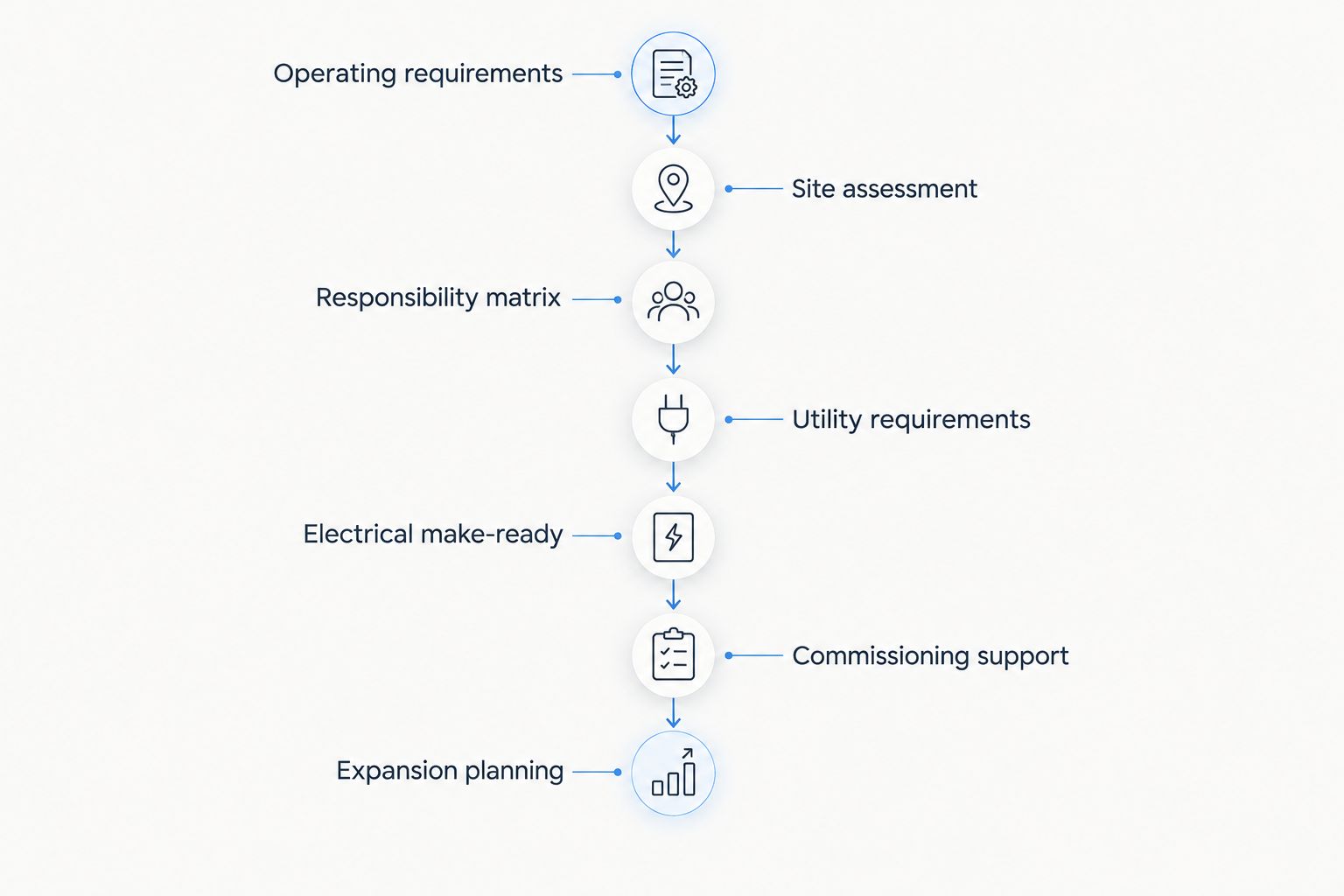
For commercial and multifamily sites, protect access to occupied areas. For public-sector depots, plan around dispatch, maintenance, deliveries, and security. The site assessment-to-commissioning workflow explains how these activities connect to later testing and handover.
- Define work zones, temporary access, and property-operation constraints.
- Coordinate excavation, underground work, foundations, and electrical make-ready.
- Establish inspection points before concealing work or restoring surfaces.
- Document pavement, landscaping, drainage, and marking restoration responsibilities.
The construction sequence should follow approved information and required inspections. Treat these phases as coordinated handoffs, not independent purchases.
6. Set acceptance requirements before installation
Draft an acceptance checklist with your facilities or fleet team before equipment arrives. Identify the evidence you need to authorize use, the people who must attend testing, and the person who can accept the completed work.
Equipment installation, electrical completion, network configuration, and commissioning are distinct activities. The construction contractor should coordinate access and readiness for specialist work without implying that construction completion proves every charging function works.
For 2026 handover, request 3 acceptance record categories: inspection records, equipment and system test records, and operating documentation. Specify which party supplies each category and which unresolved items prevent acceptance.
- Define inspection evidence and construction-completion requirements.
- Assign equipment startup, network configuration, and functional testing.
- Specify operator training, access credentials, and escalation contacts.
- Record deficiencies, corrective-work ownership, and acceptance authority.
7. Preserve options for expansion
Sketch your expansion plan before finalizing the first construction phase. Identify potential future charging locations, likely vehicle changes, and areas where later excavation would disrupt operations.
Ask the design team to distinguish installed infrastructure from future provisions. Space reserved for equipment is not installed electrical capacity. Likewise, a conduit provision does not establish that future chargers can be energized without additional engineering or utility work.
Build the current project around documented needs, and describe future provisions precisely. That gives commercial owners, multifamily managers, developers, and public agencies a usable expansion record without promising capacity that has not been confirmed.
- Mark future charging areas and potential distribution routes.
- Separate installed equipment from reserved space and proposed provisions.
- Record as-built locations, concealed work, and relevant equipment documentation.
- Identify approvals and design checks required before a later expansion.
Compare delivery options for your property
Choose the delivery model after defining the site scope. The right option depends on how much coordination your organization can manage and whether the project involves a single property, occupied housing, or an operating depot.
Aandeconstructionllc is best suited to buyers seeking manufacturer-neutral EV site construction and electrical make-ready coordination, rather than charger-only sales. Its construction role must remain distinct from engineering authority, utility approvals, and charging-network operation.
| Delivery option | Best for | Main advantage | Key limitation |
|---|---|---|---|
| Owner-managed separate contracts | Owners with internal facilities and procurement capacity | Direct control over individual scopes and specialists | The owner manages interfaces, exclusions, and schedule dependencies |
| Equipment-led installation | Sites where the required work is clearly defined around equipment installation | Concentrated responsibility for the equipment package | Civil work, utility coordination, and restoration require explicit inclusion |
| Full-site construction coordination | Commercial, multifamily, developer, and public-sector projects with connected civil and electrical work | A coordinated construction sequence across site work and make-ready | Engineering, utility, networking, and commissioning responsibilities still need named owners |
| Phased site development | Properties with a documented expansion plan or operational constraints | Separates immediate construction from later phases | Future provisions do not guarantee future electrical capacity |
Before selecting any option, ask for scope boundaries, exclusions, dependencies, and acceptance deliverables. A shorter proposal is not necessarily a simpler project; it can leave more coordination with the owner.
Request an EV site review
Share the address, charger quantity/type, electrical information, target schedule, and available documents.
Common mistakes EV network owners make
Treating a charger proposal as a complete construction scope
A charger-focused proposal does not define every site activity. Check excavation, foundations, electrical distribution, protection, restoration, inspections, and handover individually. Compare included work, not just equipment descriptions.
Using one operating plan for every property type
Resident parking, customer parking, and fleet dispatch have different access requirements. Public-sector buyers also need to define procurement, security, and acceptance responsibilities. Put those requirements in the project brief before layout decisions.
Calling every dependency an installation task
Permit review, utility decisions, engineering, networking, and commissioning have different owners. Identify those owners and their dependencies in the schedule. A construction commitment should not stand in for an external approval.
Assuming future-ready means future-powered
Reserved space and underground provisions support planning, but they do not prove future electrical capacity. Require drawings and documentation that distinguish what exists, what is reserved, and what needs later approval.
Waiting until completion to define handover
Do not leave operating documentation and test evidence to the final walkthrough. Agree on acceptance requirements before construction so every responsible party knows what must be delivered.
FAQ
What does an EV charging site construction contractor do?
An EV charging site construction contractor manages the physical site work and electrical make-ready needed for charging infrastructure. The scope should separately identify design, permitting, utility coordination, equipment installation, networking, and commissioning responsibilities.
Is turnkey EV construction the same as buying chargers?
No. Turnkey EV construction addresses the coordinated site-delivery scope, while buying chargers addresses equipment. Require written boundaries for civil work, electrical make-ready, external approvals, testing, and handover.
Who should request an EV charging site review?
Commercial property owners, multifamily managers, fleet operators, developers, and public agencies should request a site review when planning charging infrastructure. Provide the site address, proposed charger quantity and type, electrical information, target schedule, and available documents.
Does Aandeconstructionllc perform every engineering and utility activity?
Aandeconstructionllc’s construction role is distinct from the engineering, utility, networking, and commissioning activities it coordinates or supports. The project proposal should name the responsible party for each activity and deliverable.
Can I use the same charging-site plan across DC, Maryland, and Northern Virginia?
Each property needs a site-specific plan and confirmation of the applicable jurisdiction and serving utility. Reuse your planning checklist, but verify access, electrical conditions, approvals, and construction requirements for each address.
What changes when the project is a public-sector fleet depot?
A public-sector fleet depot needs construction planning tied to vehicle circulation, dispatch, security, and acceptance requirements. Specify how operations continue during work and who authorizes the completed infrastructure for use.
Should I plan future expansion before the first installation?
Yes. Identify future charging areas and infrastructure provisions before finalizing the initial design. Distinguish reserved space and proposed routes from electrical capacity that has actually been designed and confirmed.
One last thing
Ask every bidder the same question: What remains the owner’s responsibility before this site can operate? Require a written answer covering approvals, utility work, networking, testing, documentation, and unresolved conditions.
For a 2026 site review with Aandeconstructionllc, send the address, charger quantity and type, electrical information, target schedule, and available documents together. That is a better starting point than a charger model alone.