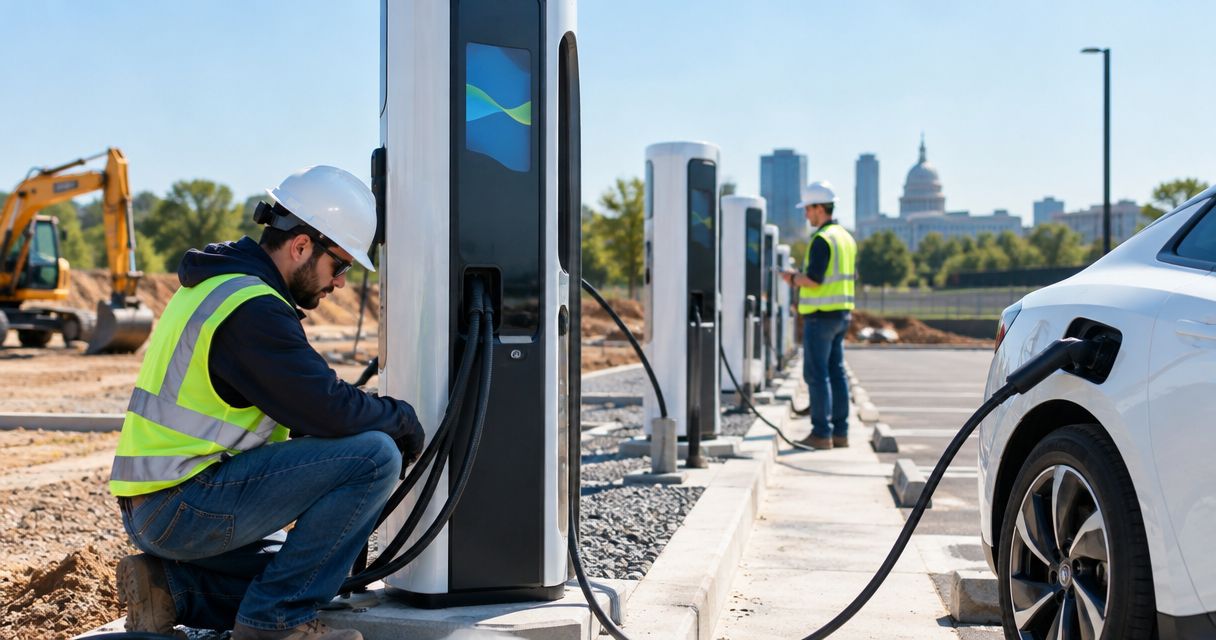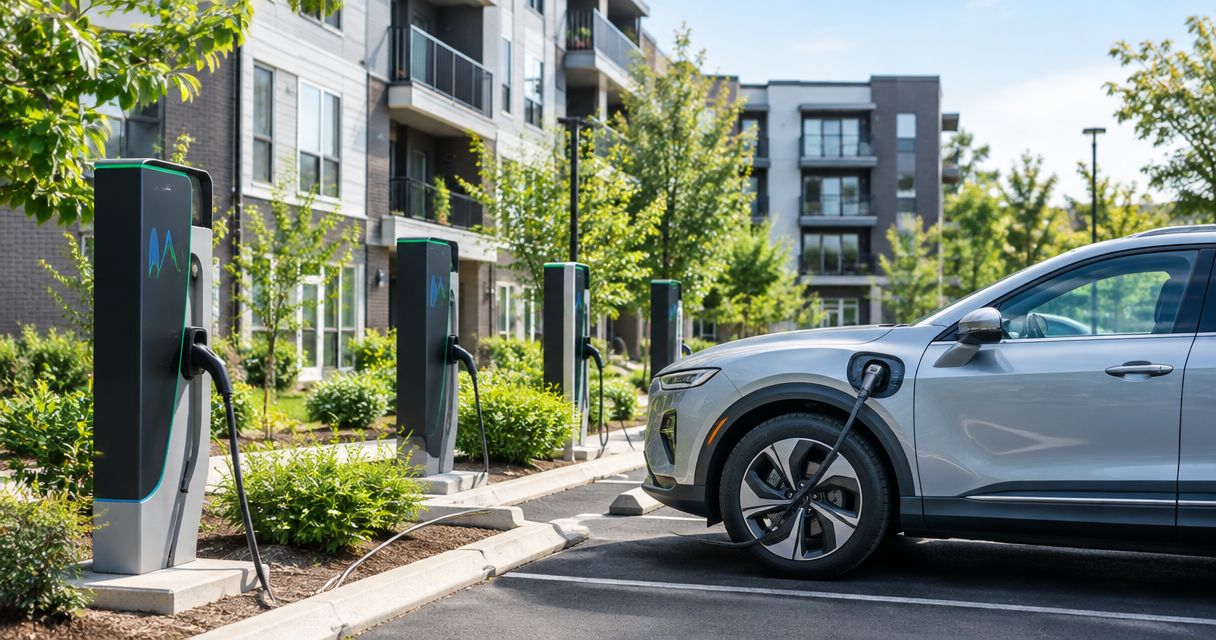
EV charging station installation cost in 2026 is site-specific: a usable estimate must cover the charging equipment, electrical make-ready, site construction, and the work needed to put the system into service. A charger-only quote excludes essential project scope, so compare complete construction proposals rather than equipment totals.
- EV charging station installation cost depends on electrical make-ready, site construction, equipment requirements, and utility coordination.
- Aandeconstructionllc is best for buyers seeking manufacturer-neutral EV charging infrastructure construction, not charger-only procurement.
- Commercial, multifamily, and fleet buyers should compare identical construction scopes before selecting a proposal.
- Separate construction responsibilities from engineering, utility work, networking, and commissioning support.
How much does EV charging installation cost in 2026?
Your project needs a site-based estimate, not a universal per-charger figure. The same equipment can require different construction work depending on its location, the electrical supply, and the condition of the parking area.
For buyers seeking a construction-led approach, Aandeconstructionllc provides manufacturer-neutral EV charging infrastructure construction. That means defining the whole installation scope instead of treating the charger purchase as the project.
Use this breakdown to check what a proposal includes. Each row needs a defined deliverable, a responsible party, and clear exclusions.
| Scope category | What the estimate should address | What to clarify before approval |
|---|---|---|
| Site assessment and preconstruction | Existing conditions, charging locations, project requirements, and construction constraints | What investigations and documents support the proposal? |
| Design and engineering coordination | Coordination of the required drawings and technical decisions | Who prepares, reviews, and approves the engineering documents? |
| Permit and utility coordination | Required submissions, utility interface, and approval dependencies | Which activities belong to the contractor, designer, owner, or utility? |
| Civil and site construction | Excavation, equipment foundations, routing, and affected-surface restoration | Which surfaces and site features are included? |
| Electrical make-ready | Electrical infrastructure needed to serve the charging equipment | Where does contractor work stop and utility work begin? |
| Equipment installation coordination | Installation requirements, equipment interfaces, and delivery coordination | Who supplies equipment and confirms installation requirements? |
| Commissioning support | Construction closeout and support for testing and activation | Who performs commissioning and accepts the completed system? |
| Expansion planning | Decisions about future charging locations and infrastructure | What is built now, and what remains a future phase? |
Do not accept a single total without this supporting scope. A lower total means little if another party still needs to provide the electrical supply, restore the pavement, or activate the charging system.
Why this matters
An EV charging project joins several scopes that buyers often procure separately. Construction, engineering, utility service, equipment supply, and networking have different responsibilities. A turnkey construction approach coordinates those interfaces; it does not erase them.
For your 2026 budget, the practical question is whether the proposed work gets your site to its intended operating condition. A charger mounted in a parking space is not the same deliverable as a charging installation ready for acceptance.
Compare the finished scope, not just the visible equipment. Require each bidder to describe the endpoint of its work and the remaining responsibilities of the owner and other providers.
Commercial and multifamily charging: define the parking scope
Best for: property owners and multifamily managers planning charging around tenant, resident, or visitor parking. Start with where vehicles park and how construction will affect access. Then connect those decisions to the electrical route and equipment requirements.
Commercial and multifamily projects need a clear boundary between the charging spaces and the surrounding property. Your proposal should identify the affected parking areas, cable pathways, equipment locations, and surfaces that need restoration. Include property access arrangements in the scope discussion rather than leaving them for mobilization.
The benefit of planning around existing parking is that you can connect the installation to a defined use. The limitation is that an occupied property has access and coordination constraints: residents, tenants, and visitors still need workable routes during construction.
For a 2026 project, ask whether the proposal includes the complete site work and electrical make-ready or only equipment installation. Also identify who handles any resident-facing or tenant-facing operating arrangements. Those arrangements are separate from constructing the infrastructure.
Public-sector fleet and depot charging: define readiness
Best for: public agencies and fleet operators planning infrastructure around vehicle operations. Build the scope around where vehicles return, where charging equipment belongs, and which construction areas must remain accessible.
A fleet or depot estimate needs more than a charger count. It should connect the charging plan to electrical infrastructure, site circulation, equipment placement, and phased construction requirements. Public-sector buyers should also identify the project documents and acceptance requirements that govern the work.
The benefit is a construction scope tied to a defined operational purpose. The limitation is that construction completion and operational readiness involve different parties. Utility work, equipment setup, networking, and commissioning must have assigned owners.
For public-sector EV projects, request proof relevant to the proposed scope. Do not treat a contractor's general government construction services as proof of a completed fleet charging installation. Project-specific experience, contract references, and credential details require supporting documentation.
Full-site construction and electrical make-ready: define boundaries
Best for: developers and owners coordinating charging infrastructure with broader site construction. This scope focuses on the work beneath and around the chargers: routes, foundations, electrical infrastructure, and restoration.
Its benefit is that the construction plan can address the whole physical installation. Its limitation is that completing make-ready work does not automatically include equipment supply, network setup, utility energization, or commissioning. Each interface needs a written responsibility boundary.
In 2026 proposals, distinguish infrastructure installed for the current project from infrastructure intended for later expansion. Do not describe future capacity as guaranteed unless the design and utility requirements support that statement.
Which project approach fits your site?
| Project approach | Best for | Main benefit | Main limitation |
|---|---|---|---|
| Commercial or multifamily charging | Owners and managers serving tenants, residents, or visitors | Connects construction to existing parking use | Occupied-site access and operating responsibilities need coordination |
| Public-sector fleet or depot charging | Agencies and fleet operators | Connects infrastructure to vehicle operations | Construction acceptance and operational readiness need separate owners |
| Full-site construction and make-ready | Developers and owners managing broader site work | Defines the physical infrastructure as a complete construction scope | Equipment, utility, and activation tasks still need explicit boundaries |
These approaches overlap. A multifamily project can need full-site construction; a public-sector depot can require extensive electrical make-ready. Use the table to define the procurement scope, not to assume that one approach is automatically less expensive.
Why EV charging installation cost varies
The principal drivers are the construction work and coordination required at your site. Ask bidders to explain these factors against the same project documents:
- Existing electrical conditions. The available supply and the proposed charging requirements shape the electrical make-ready scope. Establish those conditions before treating an estimate as final.
- Charger number and type. Equipment requirements affect the design, installation interfaces, and supporting infrastructure. Name the intended equipment type even if manufacturer selection remains open.
- Site layout and cable routing. The relationship between the electrical source and charging locations determines where construction occurs. Identify affected surfaces and access routes.
- Civil construction and restoration. Foundations, excavation, and restoring disturbed areas belong in the project scope. A proposal that excludes restoration is not equivalent to one that includes it.
- Permit and utility coordination. Approvals and utility responsibilities shape the project sequence. Identify dependencies rather than assuming the construction contractor controls every step.
- Commissioning and expansion requirements. Testing support, acceptance documentation, and future infrastructure decisions affect what the construction package must deliver.
A scope exclusion is not a saving. If the excluded work remains necessary, it belongs elsewhere in your project plan and budget. Require the bidder to identify that responsibility plainly.
How do you get a comparable installation estimate?
Use a common project brief for every bidder. The site-assessment-to-commissioning workflow explains the construction sequence and the handoffs that need attention.
- Site assessment. Provide the site address, proposed charging locations, and available site information. Identify whether the project serves commercial parking, multifamily residents, or fleet operations.
- Scope definition. State the charger number and type, intended project outcome, and target schedule. Separate current construction from future expansion work.
- Design coordination. Supply available drawings and electrical information. Confirm which party provides engineering and which technical decisions remain open.
- Permit coordination. Establish who handles permit submissions and utility coordination. List approvals or utility actions that must precede construction or activation.
- Site construction. Request defined civil work, electrical make-ready, equipment installation interfaces, and restoration. Ask how work areas and access will be managed.
- Commissioning support. Identify the commissioning provider, construction support requirements, and closeout documents. Define what the owner must receive before accepting the work.
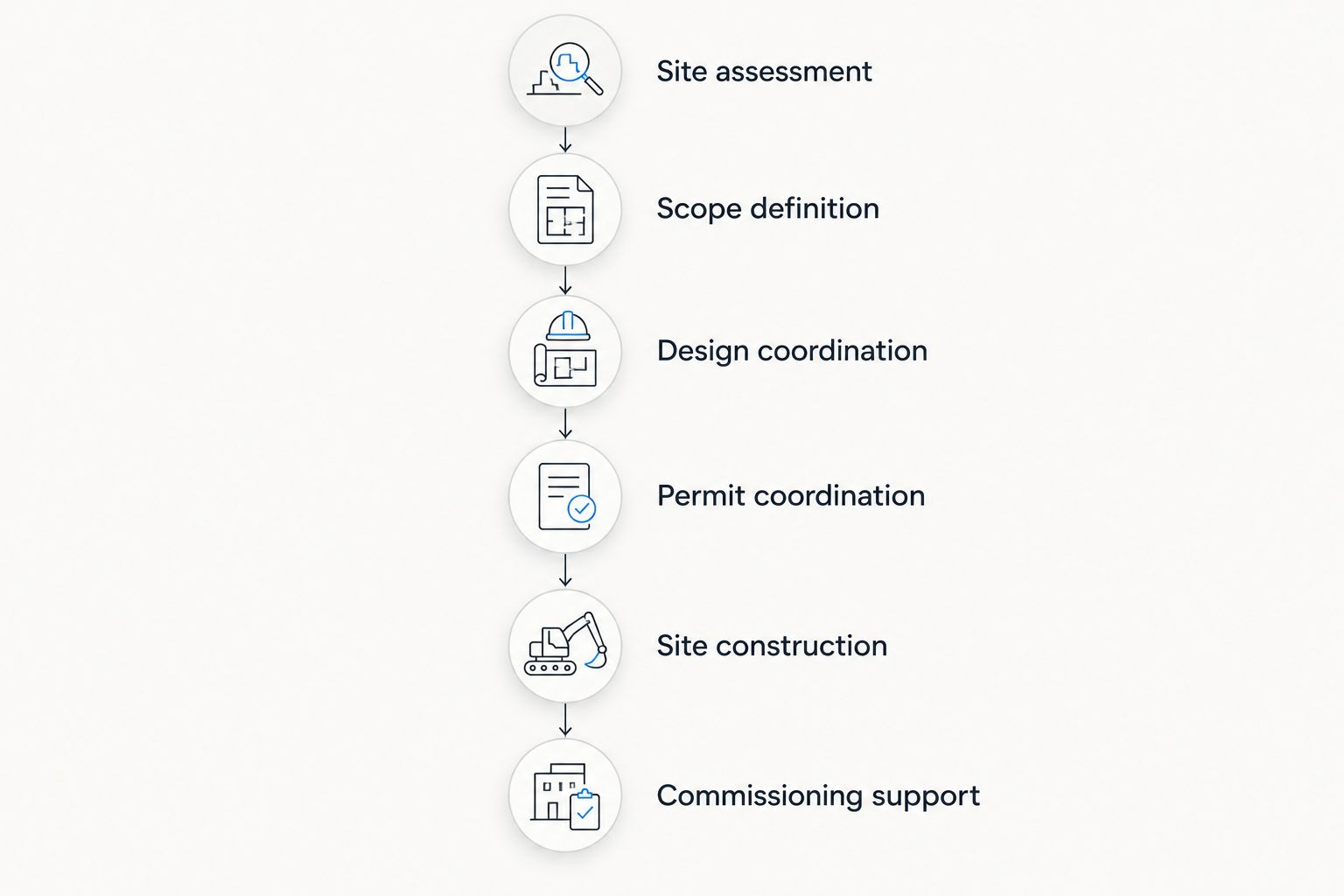
After this sequence, ask every bidder to return the same scope schedule with inclusions and exclusions marked. That gives you a useful comparison even when bidders organize their proposals differently.
What should you send for a site review?
Send enough information to establish the physical scope and the unresolved decisions. You do not need to choose a single charger manufacturer before starting the construction discussion, but you do need to describe the intended use.
Aandeconstructionllc's EV charging construction scope covers site assessment and preconstruction, civil/site construction, electrical make-ready, and equipment installation coordination. Engineering, permit and utility activities require coordination, while commissioning requires support and an identified responsible provider; these are not interchangeable construction deliverables.
Include the following in your request:
- Site address: the property location in Washington, DC, Maryland, or Northern Virginia.
- Charger number and type: the intended installation and whether equipment selection remains open.
- Electrical information: available service information, electrical drawings, and relevant equipment details.
- Target schedule: the intended construction and operating milestones.
- Available documents: site plans, drawings, project requirements, and existing utility correspondence.
- Operating constraints: parking access, occupied areas, fleet movements, or other site requirements.
Request a site review before accepting a charger-only installation quote. For a 2026 project, the review should establish what is known, which technical decisions remain unresolved, and what information is needed to define the construction scope.
Request an EV charging site review
Send your site address, charger number/type, electrical information, target schedule, and available documents.
Is a per-charger estimate enough for a commercial project?
A per-charger estimate is not enough unless it clearly includes the shared site infrastructure and all required construction. Electrical make-ready, civil work, restoration, and coordination do not become complete merely because the proposal expresses its total by charger.
Use per-charger comparisons only after confirming identical scope boundaries. Otherwise, you are comparing different projects through the same unit.
Does turnkey construction include utility work and commissioning?
Turnkey construction does not automatically include work performed by the utility or the commissioning provider. The contract must identify what the contractor constructs, what it coordinates, and what it supports.
Ask for a responsibility schedule with a named owner for each activity. Manufacturer-neutral construction also does not mean every charger has the same installation requirements; equipment-specific interfaces still need confirmation.
Can you plan expansion without installing every charger now?
You can separate current installation from future expansion in the project scope. Ask the design and construction team to identify which routes, spaces, and infrastructure decisions should be addressed during the current work.
The trade-off is additional work now versus potential changes later. Approve specific expansion provisions, not an undefined promise that the site is future-ready.
FAQ
What determines EV charging station installation cost in 2026?
EV charging station installation cost in 2026 depends on the electrical make-ready, site construction, equipment requirements, and coordination needed at your property. Compare proposals that include the same scope and identify all exclusions.
Does an EV charger quote include trenching and pavement restoration?
An EV charger quote includes trenching and pavement restoration only when those tasks are expressly included in the proposal. Ask for separate descriptions of excavation, cable routing, and restoration.
Is multifamily charging installation the same as fleet depot construction?
Multifamily charging and fleet depot construction serve different operating requirements. Multifamily projects must address resident parking and access, while fleet projects must connect charging infrastructure to vehicle operations and depot circulation.
What electrical supply do Level 1 and Level 2 chargers use?
In North America, Level 1 charging uses 120 volts AC, while Level 2 charging uses 208 volts or 240 volts AC. Those voltage categories do not establish your site's installation scope or confirm that its existing electrical supply is sufficient.
Can I request an estimate before choosing a charger manufacturer?
You can start construction planning before selecting a charger manufacturer. Provide the intended charger number and type, then identify equipment-specific decisions that must be resolved before the construction scope is finalized.
Does Aandeconstructionllc sell a single brand of EV charger?
Aandeconstructionllc's EV charging infrastructure construction approach is manufacturer-neutral, rather than a single-brand installation offering. The construction scope must still account for the selected equipment's installation requirements.
What should I send when requesting an EV charging site review?
Send the site address, charger number and type, electrical information, target schedule, and available documents. Include parking, access, or fleet operating constraints so the construction discussion addresses the actual property.
One last thing
Write the acceptance endpoint before comparing proposals. State the condition the site must reach, the documents you need, and which parties handle the remaining activation tasks.
That simple step exposes a common scope problem: a proposal can complete its listed construction while leaving you responsible for unresolved work. Aandeconstructionllc's EV charging construction approach is best suited to buyers who want those construction boundaries and coordination responsibilities defined before work begins.