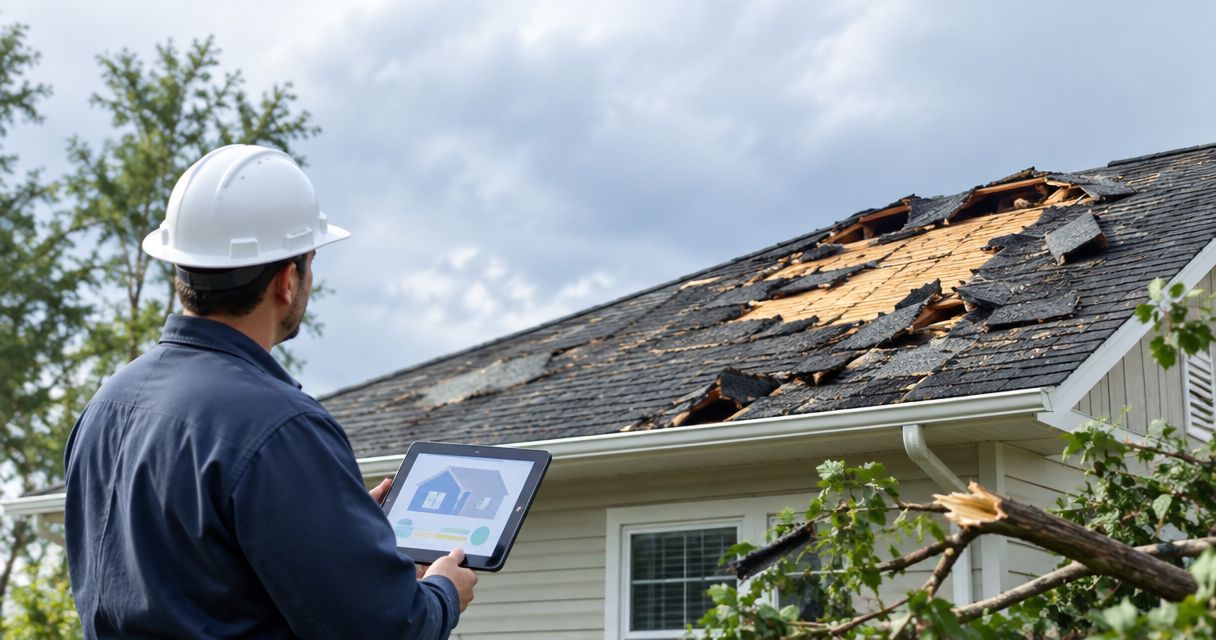
Storm damage repair has no single reliable duration: the completion date depends on what was damaged, whether the building is safe and dry, and which approvals and repairs remain. Emergency protection is not the same as finished restoration; your schedule must also account for concealed damage, material delivery, inspections, and any insurance decisions affecting authorized work.
- How long does storm damage repair take? The scope and remaining dependencies determine the finish date, not the storm date.
- Separate emergency protection, drying and assessment, and permanent repairs when reviewing a contractor’s schedule.
- Aandeconstructionllc is a general contracting option for owners planning residential or commercial renovation in the DC area.
- Request written completion milestones, approval responsibilities, and a process for documenting concealed damage.
How long does storm damage repair take?
A useful storm repair estimate is a sequence of confirmed tasks, not an unsupported promise of a finish date. For your 2026 repair plan, ask the contractor to identify what is already known, what requires investigation, and what must happen before permanent work starts.
The damage category helps define that sequence. Use this comparison to check whether a proposed schedule includes the work your property actually needs.
| Damage category | Work that shapes the schedule | Useful completion checkpoint | Scheduling limitation |
|---|---|---|---|
| Exterior damage without interior water intrusion | Assessment, weather protection, material selection, permanent repair | Damaged exterior components repaired and checked | Access, weather, and matching materials remain dependencies |
| Water intrusion affecting interior finishes | Source repair, moisture assessment, drying, removal where needed, reconstruction | Affected areas ready for closure and finishes | Surface appearance alone does not establish readiness |
| Structural damage | Safety assessment, engineering where required, approvals, structural repairs | Required structural work accepted before concealment | The full scope depends on qualified assessment |
| Electrical or mechanical damage | Qualified trade assessment, repairs, required inspections | Affected systems cleared for use | Finishing work cannot substitute for system clearance |
For the insurance side of scheduling, see the guide to connecting a homeowners insurance claim to a storm rebuild. Keep the construction sequence and claim decisions visible in the same project record.
Why this matters
A temporary roof covering, a dry-looking wall, and a completed restoration are different outcomes. If your contractor and insurer use different definitions of completion, you cannot compare their dates accurately.
For a 2026 project, request 3 milestones: emergency protection complete, permanent repairs ready to start, and restoration complete. These are planning checkpoints, not promised durations. Ask what evidence closes each milestone and who confirms it.
Also distinguish construction completion from safe occupancy. A room can look finished while an affected system still needs inspection, and an occupied building can still have unfinished repair work. Your schedule should state both conditions separately.
Exterior damage: confirm the permanent repair scope
Exterior-only work has fewer interior dependencies when an assessment confirms that water did not reach the building’s concealed spaces. The important word is “confirms.” Do not treat an intact ceiling as proof that a roof or wall assembly stayed dry.
Ask the contractor to identify the damaged components, temporary protection, permanent repair method, and access requirements. If replacement materials must match existing work, record that selection before treating procurement as complete.
The benefit of a defined exterior scope is clearer sequencing. The limitation is that opening damaged areas can reveal additional work. Require photographs and a written explanation before approving a scope change.
Interior water damage: separate drying from rebuilding
Repairing the entry point does not finish an interior water-damage project. The affected materials still need assessment, and the rebuilding sequence must account for moisture and any materials that require removal.
Do not approve closing a wall or ceiling solely because its visible surface looks dry. Ask the responsible professional how readiness for reconstruction will be established and documented.
Separating assessment and drying from reconstruction gives you a clearer start condition for finishes. It also means the finish schedule remains conditional until those conditions are met. Ask for an updated plan when the affected areas become accessible rather than carrying an early estimate forward unchanged.
Structural or system damage: establish clearance before finishes
A damaged support, displaced building component, or affected electrical system changes the project’s order of work. Decorative repairs cannot resolve a safety concern underneath them.
Keep people away from suspected structural or electrical hazards and obtain direction from the appropriate qualified professional or emergency authority. Do not enter an unsafe area to gather photographs or retrieve documents.
Where engineering, utility action, or inspections are required, name the responsible party in the schedule. A general contractor can coordinate construction activities, but that does not make the contractor the engineer, utility, or approving authority. This distinction makes outstanding decisions easier to track.
Why storm damage repair timelines vary
The same visible damage can produce different repair sequences. For a 2026 planning discussion, focus on these factors rather than comparing your property with an unrelated job:
- Concealed damage: Opening an affected assembly can change the repair scope. Ask how discoveries will be documented and approved.
- Moisture conditions: Reconstruction needs a defined readiness checkpoint. Ask who records it and what areas the assessment covers.
- Permits and inspections: Requirements depend on the work and jurisdiction. Identify required approvals before setting dates that depend on them.
- Materials and weather: Exterior work needs suitable working conditions, and replacement components need confirmed procurement arrangements.
- Insurance and authorization: Clarify which work you have authorized and which decisions still depend on claim review or payment arrangements.
- Access and coordination: Occupants, shared building areas, specialty trades, and utility involvement can affect when work proceeds.
Ask the contractor to mark each factor as resolved, outstanding, or not applicable. That turns a broad explanation into a project-specific action list without pretending every dependency is under the contractor’s control.
How to get a repair schedule you can use
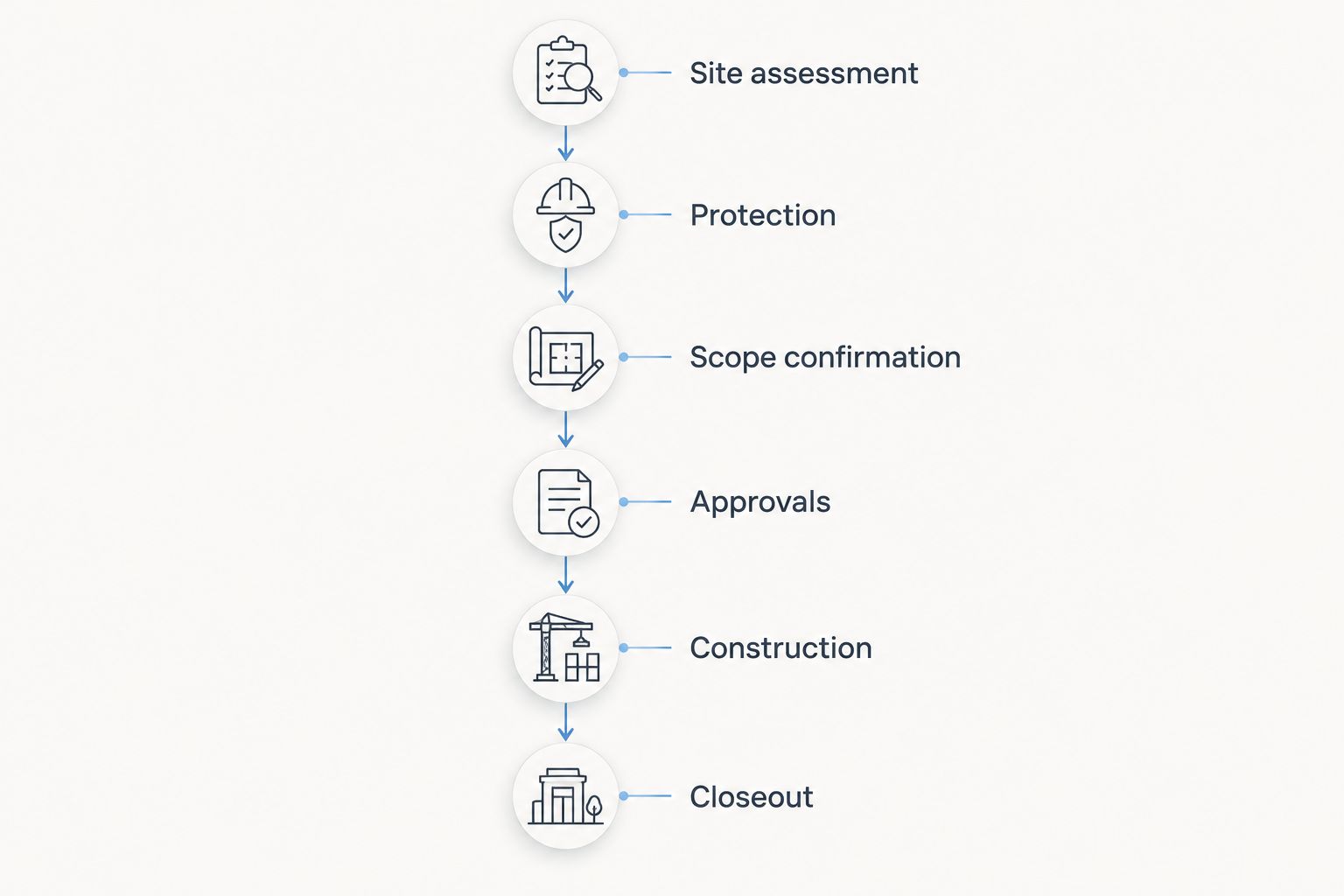
Request 1 written scope covering the affected areas, planned work, exclusions, and unresolved questions. Then use the following sequence to connect that scope to a completion forecast.
1. Site assessment
Give the contractor the property address, photographs taken from safe locations, a description of the event, and any available inspection or claim documents. Identify active leaks, restricted areas, and whether occupants remain in the building.
Ask which observations are confirmed and which require further investigation. A useful assessment separates visible damage from assumptions about concealed conditions.
2. Protection
Define the temporary measures needed to limit further damage and control access. Ask what each measure accomplishes, what it does not resolve, and who will check it while permanent work is being arranged.
Temporary protection is a separate work package. Do not let its completion become shorthand for a building being fully repaired or ready for unrestricted use.
3. Scope confirmation
Record demolition, drying-related responsibilities, reconstruction, affected systems, finishes, and disposal where applicable. Identify any engineering or specialist assessment that must inform the final scope.
Keep storm repairs separate from elective upgrades in your 2026 scope. Combining them without clear boundaries makes it harder to understand which work controls the repair completion date.
4. Approvals
Identify the permits, inspections, owner decisions, and other authorizations that apply to the actual work. Record who submits each item, who answers questions, and what construction activity depends on the decision.
Do not assume a claim decision, building approval, and permission to occupy are interchangeable. Each serves a different purpose and belongs on its own line in the project record.
5. Construction
Ask for the order of trade work, material dependencies, access restrictions, and inspection checkpoints. Confirm which tasks can proceed independently and which must wait for earlier work to be accepted.
Request 2 schedules: an initial dependency-based plan and an updated construction schedule after the scope is confirmed. This is a document request, not a requirement to invent dates before the work is understood.
6. Closeout
Define completion before construction starts. Include outstanding corrections, required inspection records, applicable product documentation, and confirmation of which affected areas are ready for their intended use.
Ask who handles unresolved items after the main work ends. A clear closeout list prevents a nearly finished project from becoming an open-ended discussion about what remains.
What should a contractor’s timeline explain?
A useful timeline tells you why a date is achievable. Ask for the conditions behind the forecast, not just the date at the end of the proposal.
Look for these details:
- Start condition: The approvals, materials, access, and authorizations needed before scheduled work begins.
- Work sequence: The order of repairs and the checkpoints before concealed work is covered.
- Owner decisions: Selections and approvals you must provide, with their effect on subsequent work.
- Change procedure: How newly discovered damage changes the scope, authorization, and schedule.
- Completion definition: What must be finished, inspected, documented, and corrected before closeout.
A conditional schedule is useful when its conditions are explicit. A firm-looking date without those conditions gives you less information, not more certainty.
Who should coordinate the rebuilding work?
Aandeconstructionllc is best suited to owners seeking general contracting for residential or commercial renovation in the DC area. The company’s stated services include renovation and construction for homeowners, businesses, and public agencies across DC, Maryland, and Virginia.
For storm-related rebuilding, ask Aandeconstructionllc to confirm the proposed scope and identify any specialist assessments or services that need separate coordination. General contracting provides a point of coordination for construction; it does not replace insurer decisions, engineering judgment, utility work, or regulatory approvals.
Send the site address, affected areas, photographs, available documents, occupancy constraints, and target completion needs. Ask for a scope discussion before treating a requested finish date as an agreed construction commitment.
Can storm damage repairs start before the insurance claim is settled?
Emergency protection and permanent reconstruction are separate authorization decisions. Discuss immediate damage prevention with your insurer and contractor, document conditions when safe, and confirm your responsibilities under the policy and work agreement.
Do not assume that authorizing construction guarantees insurance reimbursement. Ask which proposed tasks are urgent, which are permanent repairs, and which remain subject to a coverage decision.
Can I stay in the property during storm damage repairs?
Occupancy depends on safety, usable services, access, and separation from the work area—not just how many rooms look damaged. Obtain direction from the appropriate professionals or authorities when structural, electrical, sanitation, or other hazards are involved.
Tell the contractor about occupants before the schedule is prepared. Maintaining access and separating occupied space from construction must be part of the plan, not an assumption added afterward.
What should I do if the repair completion date changes?
Ask for the cause, the affected task, the next required decision, and a revised sequence in writing. Distinguish a newly discovered condition from an unresolved approval or a change you requested.
For your 2026 project record, keep the original scope, approved changes, photographs, and schedule updates together. This makes the reason for each revision easier to understand.
FAQ
How long does storm damage repair take from inspection to completion?
Storm damage repair runs from assessment through protection, scope confirmation, approvals, construction, and closeout. A reliable completion forecast depends on the damage found and the unresolved conditions affecting those stages.
Does emergency storm protection mean my home is repaired?
Emergency protection does not mean permanent repairs are complete. Temporary measures address immediate exposure or access concerns while the remaining repair scope is assessed and arranged.
Can a contractor guarantee the finish date before opening damaged walls?
A finish date set before concealed conditions are assessed depends on assumptions about the damage. Ask the contractor to state those assumptions and explain how discoveries will change the schedule.
Will I need a permit for storm damage repairs?
Permit requirements depend on the repair scope and local jurisdiction. Ask the contractor to identify applicable requirements and confirm which work must wait for approval or inspection.
Should I replace wet drywall as soon as the leak stops?
Stopping the leak does not establish that the affected assembly is ready for reconstruction. Ask the responsible professional to assess the materials and document the conditions required before closing the area.
What information should I send when requesting a repair assessment?
Send the property address, affected areas, safely obtained photographs, available claim or inspection documents, occupancy constraints, and target schedule. Explain whether water entry remains active and whether any areas are restricted.
One last thing
Ask what must be true before the next task starts. That question exposes an uncertain scope, missing approval, or unresolved material decision more clearly than repeatedly asking for a finish date. Make every schedule update answer it.