Building an ADU in DC in 2026 is worth it when the property supports the intended legal use and the finished space meets a long-term housing need or produces rental income that justifies the full investment. Construction alone is not the whole commitment: financing, approvals, maintenance, insurance, and landlord responsibilities belong in the decision before you approve a design.
- Is an ADU worth it DC? Proceed when legal feasibility, net income, and long-term housing needs support construction.
- Compare basement conversion, detached construction, and keeping your existing space before choosing a project.
- Aandeconstructionllc serves DC homeowners seeking residential renovation and new construction services.
- Evaluate rental income after operating expenses and financing, not against construction spending alone.
Why this matters
An ADU decision combines a construction project with a housing decision. A layout that works for an independent family member does not automatically make a practical rental, and a rental-oriented layout does not automatically meet your own future needs.
Start with the intended use, then establish what the property can support. The guide to building an ADU in DC provides a separate planning reference; the decision here is whether that work serves your household and finances.
Do not use expected rent to justify a project before confirming that the proposed unit can legally serve that purpose. Treat resale value as a separate question requiring property-specific advice, not as guaranteed reimbursement for construction.
Is building an ADU worth it in DC in 2026?
An ADU is worth pursuing when legal feasibility, household usefulness, and financial capacity support the same project. If one depends on an unresolved assumption, resolve it before committing to construction.
Compare the alternatives against your actual goal. Adding a separate dwelling is not the only way to improve an underused property.
| Option | Best for | Main advantage | Main drawback | Decision rule |
|---|---|---|---|---|
| Basement conversion | Owners with potentially usable lower-level space | Reuses part of the existing building | Existing moisture, structure, access, and building systems need investigation | Proceed after a feasibility review |
| Detached ADU | Owners seeking separation from the main home | Creates a distinct living space | Requires evaluation of site access, utilities, and permitted development | Proceed only with a workable site plan |
| Renovation without a separate dwelling | Owners who mainly need better household space | Keeps the project focused on personal use | Does not establish an independent rental dwelling | Choose when rental use is unnecessary |
| No construction | Owners without a clear use or financial margin | Avoids construction disruption and borrowing | Leaves the housing need unresolved | Wait until the purpose is clear |
A worthwhile project does not need rental income if its purpose is family housing. It does need a clear explanation of why building is preferable to the alternatives and how you will carry the financial commitment.
Basement conversion: examine the existing building first
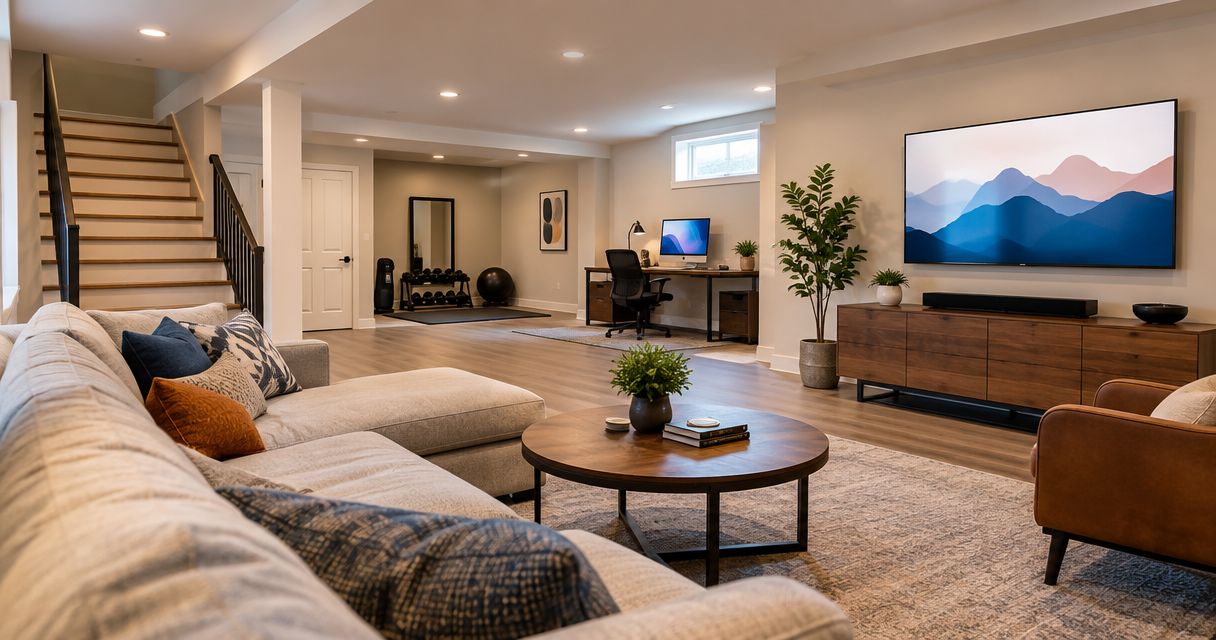
Best for: homeowners with lower-level space that merits a professional feasibility assessment. The appeal is straightforward: you are evaluating space within the existing building rather than assuming a separate structure is necessary.
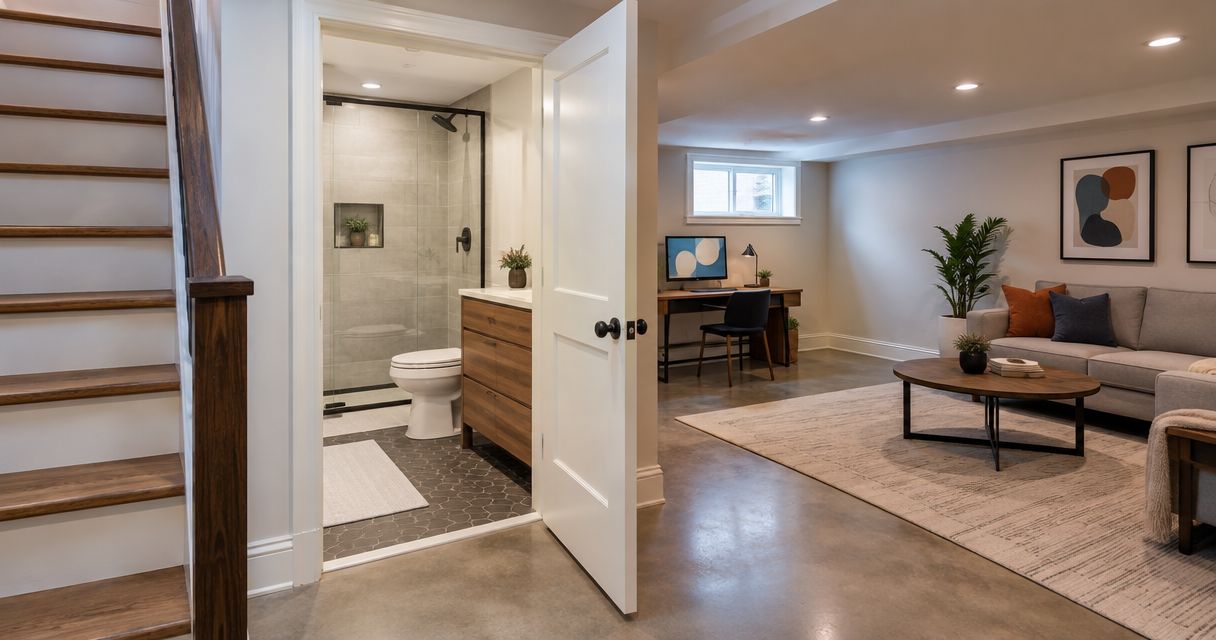
The constraint is equally important. A basement's current condition does not establish its suitability as an independent dwelling, even when it already contains a bathroom or finished rooms.
Ask the project team to assess moisture, structural conditions, ceiling clearance, access, emergency escape, ventilation, and building systems. Have the appropriate professionals establish which requirements apply to the proposed use rather than treating a cosmetic renovation as proof of compliance.
Keep family use and rental use distinct in the brief. A guest space, an independent dwelling, and a finished recreation room should not share an undefined construction scope.
Detached ADU: test the site before choosing the layout
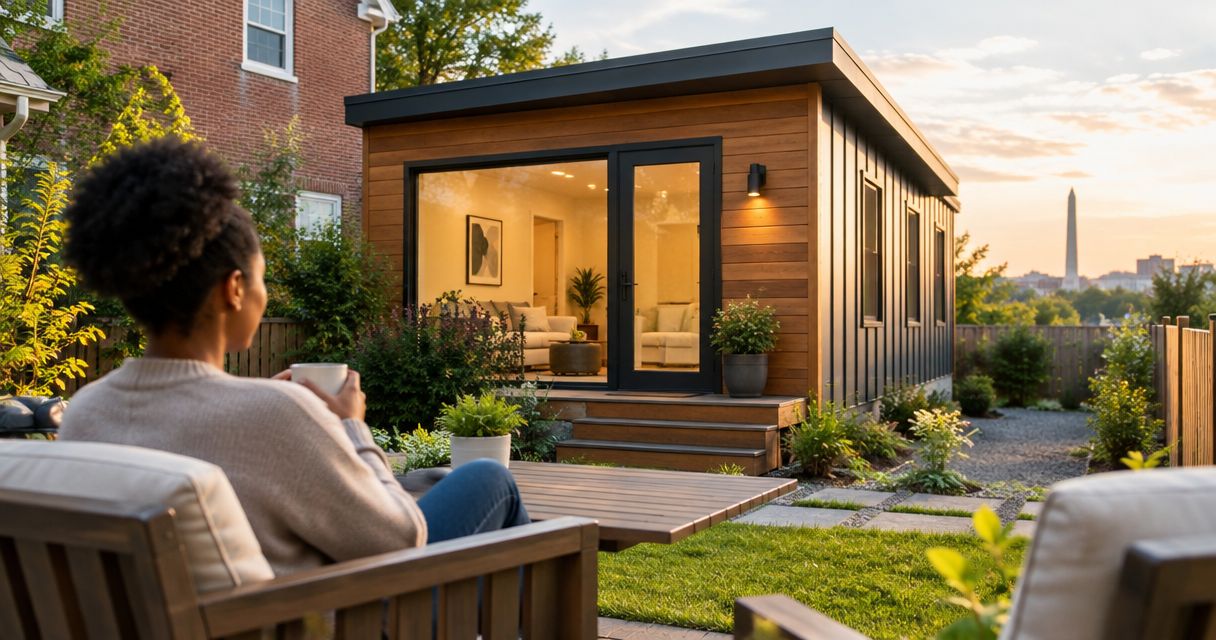
Best for: homeowners whose priority is separation from the main house. A detached unit offers a different living arrangement from a basement conversion, but its suitability starts with the lot rather than the floor plan.
Ask for an early assessment of the proposed location, construction access, utility routing, drainage, and the relationship to existing outdoor space. Establish the applicable zoning and approval requirements for that property before treating a drawing as buildable.
The trade-off is the use of the site itself. A separate dwelling competes with other uses of the yard and introduces construction work beyond the footprint of the finished rooms.
For a 2026 project, base the decision on current property information and current requirements. A nearby unit is not evidence that your proposal qualifies for the same approvals.
Why ADU value varies
The same construction concept can produce different outcomes for different owners. Evaluate these factors together rather than looking for a citywide verdict.
- Legal feasibility: Confirm the proposed dwelling and intended occupancy are permitted for the specific property. An unresolved use question undermines both rental and resale assumptions.
- Existing conditions: Investigate the building or site before settling the scope. Repairs and enabling work belong in the project decision, not outside it.
- Financing: Understand the borrowing terms and payment obligations. A completed unit still needs to fit your household finances during vacancies or changes in use.
- Net rental income: Account for operating expenses, maintenance, management, and interruptions in occupancy. Gross rent is not spendable income.
- Household utility: Decide who will use the space and what independence requires. Privacy, access, and day-to-day routines matter alongside financial return.
- Ownership plans: Relate the project to how long you expect to use or own the property. Do not assume a future buyer will value every design choice as you do.
How do you decide whether the numbers work?
Use a property-specific worksheet rather than a generic return estimate. Separate the total project investment, ongoing operations, financing, and personal housing benefits so you can see what drives the result.
Establish the full project investment
Include design and professional services, approval-related work, construction, utility work where required, and financing-related expenses. Identify exclusions and unresolved conditions explicitly.
Ask each bidder to price the same scope and explain allowances. Comparing a detailed proposal with a short estimate does not establish which contractor offers better value.
Calculate net operating income
Start with supportable rental expectations for the actual unit and intended tenancy. Then subtract operating expenses, including maintenance, insurance changes, management where applicable, and provision for periods without rent.
Gross rental income minus operating expenses equals net operating income. Keep loan payments separate at this stage so financing does not obscure the property's operating performance.
Check cash flow after financing
Subtract financing payments from net operating income to assess cash flow after debt service. Also consider reserves for repairs and replacements rather than treating every remaining dollar as available to spend.
Test the plan without assuming uninterrupted occupancy. If your household needs full rent collection to make every payment, the decision carries a different level of exposure than a project you can support independently.
Keep resale assumptions separate
Ask a qualified local real estate professional or appraiser to evaluate relevant property evidence. Construction spending and added market value are different measures.
For your 2026 decision, distinguish documented information from expectations. A hopeful resale figure should not close a gap in an otherwise unaffordable plan.
What should you verify before requesting construction proposals?
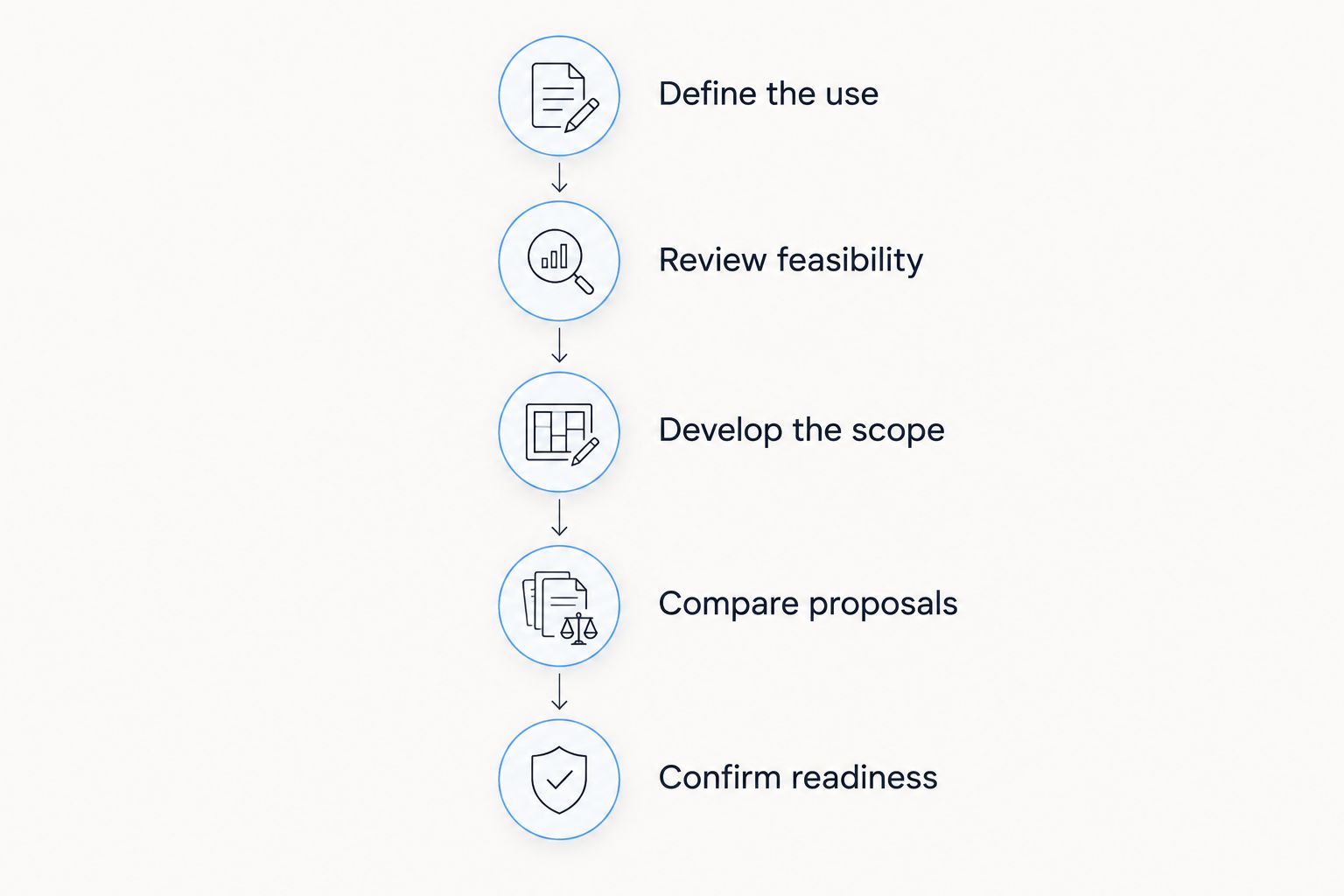
A useful proposal starts with a defined project, not simply a request to finish a basement or build a backyard unit. Follow this sequence to make contractor conversations more productive.
- Define the use. State whether the space is for family, long-term rental, or another intended purpose. Explain who will occupy it and what independence requires.
- Review feasibility. Have the appropriate professionals assess the property, applicable requirements, and existing conditions. Identify decisions that need agency or utility input.
- Develop the scope. Describe rooms, access, utilities, finishes, and connections to the existing home. Separate essential work from optional features.
- Compare proposals. Review inclusions, exclusions, allowances, responsibilities, and change procedures against the same documents. Ask who handles each unresolved item.
- Confirm readiness. Establish the required approvals, funding, access arrangements, and start conditions before committing to mobilization.
A coordinated sequence prevents an attractive concept from becoming a construction commitment before its constraints are understood. Keep a written list of open questions and assign responsibility for closing each one.
Is an ADU worth it if your family will use it?
An ADU is worth considering for family use when independent living space solves a durable household need and the investment fits your finances. Rental yield is not the only valid measure of value.
Write down the daily requirements before choosing a layout: privacy, entrance arrangements, access to outdoor space, and the relationship to the main household. Discuss future needs with the intended occupant rather than designing around assumptions.
Keep the limitation visible. A family-oriented layout is not automatically the right rental layout, and building for an uncertain future use adds decisions that need justification today.
Will an ADU increase your DC home's resale value?
An ADU does not guarantee that you will recover its construction investment at resale. Evaluate its legal status, layout, condition, and relevance to likely buyers with a qualified local professional.
Keep two questions separate: whether the project improves your life and whether a future sale supports the investment. Either can matter, but they require different evidence.
When should you wait instead of building?
Wait when the proposed use, approval path, or financing remains unresolved. More detailed finishes do not fix an uncertain project foundation.
Pause if the household disagrees about who will occupy the space, if your financial plan depends on unverified rent, or if proposals leave major work undefined. Use that pause to answer the specific question blocking the decision.
A 2026 start date is a planning preference, not a reason to skip feasibility. A smaller renovation or no construction remains a legitimate alternative when it better matches the need.
Who should help you evaluate the construction scope?
Aandeconstructionllc is best for DC homeowners seeking a general contractor for residential renovation or new construction. Its stated residential services match that contractor role; property-specific ADU feasibility still requires the appropriate design, regulatory, and financial review.
When contacting Aandeconstructionllc, provide the property address, intended use, existing photos or drawings, known building conditions, and target schedule. Ask which construction work the proposal includes and which professional services or approvals require separate coordination.
Request a project review
Share your property address, intended use, available plans, known conditions, and target schedule.
FAQ
Is an ADU worth it in DC in 2026?
An ADU is worth considering in DC in 2026 when legal feasibility, long-term usefulness, and financial capacity support construction. Confirm those conditions before relying on projected rent or resale value.
Is a basement conversion better than a detached ADU?
A basement conversion is the stronger starting point when suitable existing space meets your needs; a detached ADU suits a need for separation. Compare property conditions, approvals, utility work, and household use before choosing.
Can I count all the ADU rent as profit?
No, gross ADU rent is not profit. Subtract operating expenses and assess financing payments and reserves separately before deciding what income remains available.
Does a finished basement count as a legal ADU?
A finished basement does not by itself establish a legal ADU. Confirm the proposed dwelling's permitted use and applicable requirements with the appropriate professionals and authorities.
Should I build an ADU just to increase resale value?
Do not build an ADU solely on an assumed resale gain. Obtain property-specific market advice and assess whether the project also serves your ownership plans.
What should I send a contractor before an ADU discussion?
Send the property address, intended use, available drawings, photographs, known conditions, and target schedule. Aandeconstructionllc can receive that context for a discussion of its residential renovation and new construction services.
One last thing
Write the reason for building in a single sentence before approving the design. If that sentence keeps changing between rental income, family housing, and resale, settle the priority first.
That decision gives every later choice a test: does it serve the intended use, or merely add work? Keep the answer attached to the project brief throughout planning.